Bengaluru Witnesses Breakthrough in Drone-Based Medical Logistics with Successful Pilot by Narayana Health

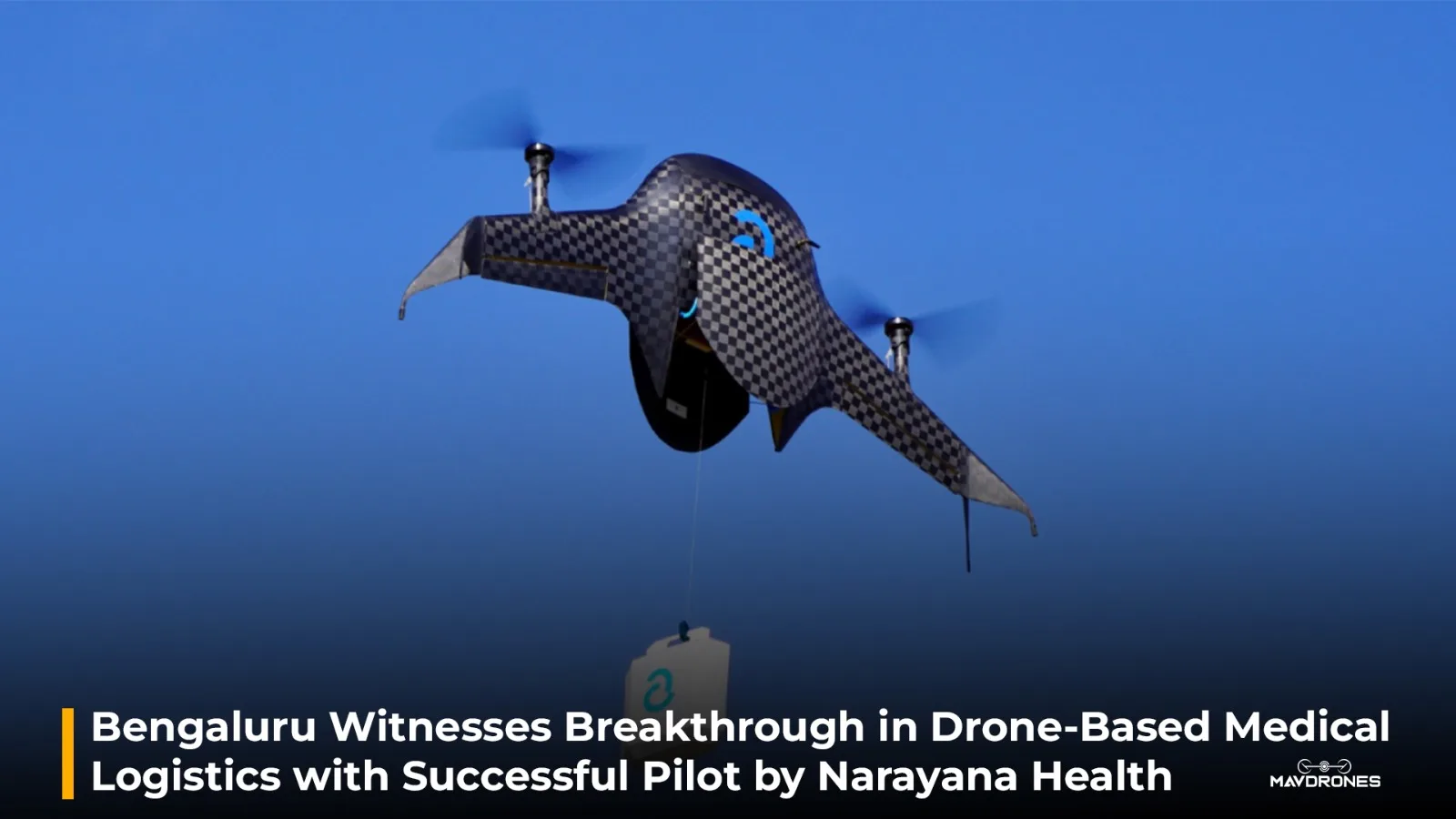
A first-of-its-kind medical logistics pilot has been successfully completed in Bengaluru, where Narayana Health, in collaboration with Airbound, deployed drone technology to transport diagnostic samples between a clinic and a central laboratory within minutes. The initiative marked a significant advancement in the use of aerial logistics within urban healthcare systems.
During the pilot phase, which spanned over 54 days, more than 700 drone flights were conducted. Each flight carried up to 40 diagnostic samples, while maintaining a record of zero failed deliveries. Up to 20 on-demand flights per day were operated, replacing the conventional batch-based road transport system and enabling a continuous flow of samples to the laboratory.
The drone route connected Narayana Health’s Chandapura clinic with its central laboratory at Narayana Health City in Electronic City, covering a distance of approximately 4 kilometres in just 10 minutes. Previously, diagnostic samples were transported via road in three to four batches daily, with delivery times heavily influenced by Bengaluru’s traffic conditions.
Through the introduction of aerial logistics, a shift from intermittent batch deliveries to real-time, continuous sample transfer was achieved. Within three weeks of implementation, road-based transport was fully eliminated, and the drone corridor became the sole mode of transfer between the two facilities. This transition enabled laboratories to initiate testing sooner, thereby improving diagnostic turnaround times and facilitating faster clinical decisions.
The pilot demonstrated how frequent and predictable drone operations could address long-standing inefficiencies in distributed healthcare systems. Traditionally, peripheral clinics relied on scheduled courier services, limiting the speed at which samples reached central laboratories. With drones enabling multiple transfers throughout the day, laboratory workflows were aligned more closely with capacity rather than transport constraints.
It was indicated that such a model could play a crucial role in enhancing access to diagnostic services, particularly in densely populated urban areas. Reduced dependency on road transport is also expected to ease congestion around major hospital hubs while lowering operational costs.
Following the success of the pilot, plans have been outlined to establish a dedicated aerial logistics corridor between Electronic City and Banashankari, with further expansion anticipated across Bengaluru and into other cities, including Kolkata. The initiative is expected to be scaled in phases, connecting additional clinics and smaller healthcare facilities to centralized laboratory infrastructure.
The drone system utilised in the pilot featured a blended-wing-body tailsitter design, combining vertical take-off capabilities with the efficiency of fixed-wing flight. This configuration supported cost-effective, high-frequency operations in dense urban environments.
The model also introduced a new approach to healthcare delivery by enabling clinics to collect samples closer to patients and transfer them rapidly to high-capacity central laboratories. This reduces the need for extensive diagnostic infrastructure at every location while maintaining access to advanced testing services.
In the coming years, the expansion of such drone-enabled networks is expected to transform how healthcare providers manage diagnostics, improving efficiency, scalability, and patient outcomes across urban healthcare ecosystems.