Drone Advertising vs Traditional Billboards: Which Is More Effective?

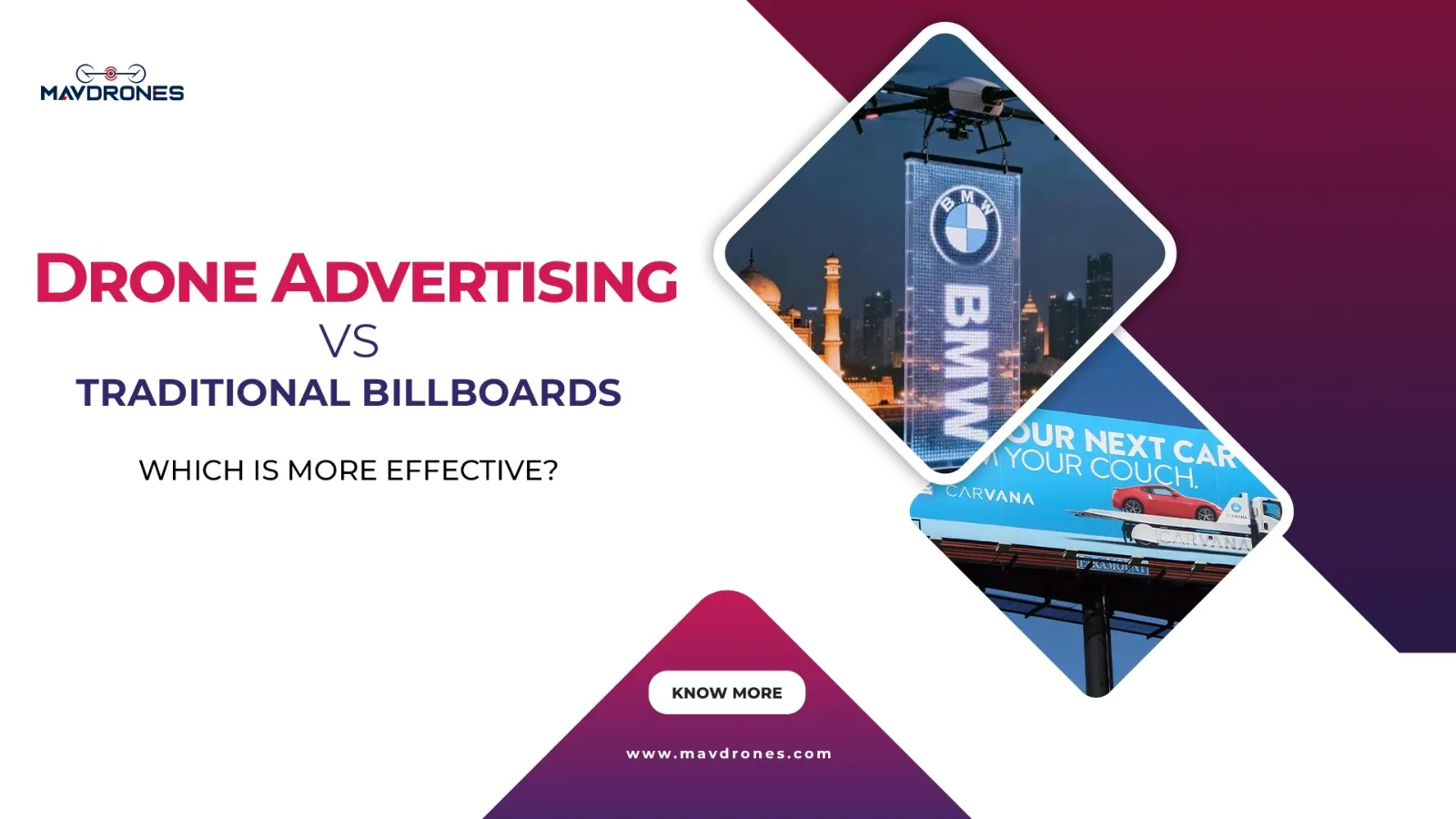
In today’s world of marketing, brands are always looking for new ways to get people’s attention. Drone advertising and traditional billboards are two ways that advertisers reach a lot of people. Each one has its own pros and cons, and they all have an effect on how engaged consumers are. But which way really works better? This article goes into detail about both, looking at cost, reach, engagement, flexibility, environmental impact, and campaign data to help marketers make a smart choice.
What Is Drone Advertising?
Drone advertising is when unmanned aerial vehicles (UAVs) with LED screens, banners, or projection systems show brand messages above crowds, events, and public places. This new strategy combines mobility with spectacle, letting advertisers reach people who are on the move.
Some important things about drone advertising are:
- Dynamic positioning: Messages can move with or ahead of crowds.
- High visibility at events: Concerts, festivals, and beaches are common venues.
- Attention capture through novelty: Aerial displays stand out in a sea of static ads.
You can program drone fleets to fly complicated routes, put on synchronized light shows, or send interactive messages when something happens in real time.
What Are Traditional Billboards?
Billboards are large outdoor ads that don’t move and are usually next to highways, streets, or other busy areas. They are still one of the oldest types of outdoor advertising (Out-of-Home, or OOH) and are useful for keeping a brand in people’s minds.
Some common traits are:
- Fixed location: Once installed, a billboard remains in place for weeks or months.
- High frequency reach: Passersby repeatedly see the same message.
- Low distraction environment: Simplicity helps reinforce branding without competing multimedia.
Billboards can be printed or digital (LED screens), and they are placed in the best spots to get the most views every day.
Effectiveness: Comparing Key Metrics
To judge how effective an ad is, you need more than just creativity; you need results that can be measured. This is how drone ads and regular billboards compare.
1. Reach and Frequency
Traditional Billboards:
Billboards are the best at getting consistent, high-frequency impressions. A strategically placed billboard along a busy urban corridor can get millions of views every day. For instance:
- A single billboard on a busy highway can be seen by more than 30,000 cars every day.
- People who drive to work every day see the message over and over, which helps them remember it.
One of the best things about billboards is that they can be seen over and over again.
Drone Advertising:
Drone ads are great at reaching people for a short time during big events. A drone show over a beach or festival can get the attention of thousands of people at once. But reach depends a lot on:
- Event attendance
- Weather conditions
- Flight regulations
- Audience mobility
Drones have a big effect but don’t happen very often, unlike billboards, which are always visible.
Verdict: In the end, traditional billboards win because they are seen more often. Drones can do better than static ads for short periods of time when it comes to targeted, event-based reach.
2. Engagement and Memorability
Drone Advertising:
Drones are new and fun to look at. They are more interesting than static signs because they move and are creative. Research on aerial advertising indicates that unconventional formats significantly enhance:
- Brand recall
- Social sharing
- Emotional engagement
An original aerial campaign over a beach or stadium can get a lot of press and social media attention, which is worth thousands of dollars in earned media value.
Traditional Billboards:
Billboards are made to be less interactive. Digital billboards can change the content they show and show moving graphics, but they don’t have the same real-time wow factor as a fleet of drones dancing above.
Billboards, on the other hand, provide consistent reinforcement, which is still useful for brand recognition.
Verdict: Drone advertising is the best way to get people to pay attention right away and remember your ad because it is new and dynamic.
3. Cost Efficiency
Traditional Billboards:
Prices depend on where you are, what format you choose, and how long you want it to last:
- Billboards that are printed can be pretty cheap.
- Digital billboards cost a lot of money in cities.
- Costs can range from Rs 1,40,000 to Rs 10,00,000 or more per month, depending on how much traffic you get and where you put your ads.
Long-term campaigns do better with prices that don’t change and visibility that stays the same.
Drone Advertising:
The costs of drone campaigns are not the same for everyone. These costs include:
- Fleet rental or ownership
- Skilled operators and insurance
- Flight planning and permits
For complicated light shows, flights can cost between Rs 4,50,000 and Rs 50,00,000 or more for each event.
Compared to a billboard running at scale over time, drone advertising is expensive per impression.
Verdict: Traditional billboards are usually a better deal for cost per impression, especially for big, long-term campaigns.
4. Targeting and Flexibility
Drone Advertising:
Drones can be used in a variety of ways at certain times, places, and events, which makes them very flexible:
- Fly over beach crowds during sunset
- Appear during halftime at sports events
- Sync messages with live performances
Drones are different because they can be used in many ways.
Traditional Billboards:
Billboards are fixed and don’t move, but they do best when they are placed along well-researched commuter routes and demographics. They reach the same audience every day without any problems with how they work.
Verdict: Drones are more flexible than other types of aircraft when timing and mobility are important. Billboards are the most common form of static, location-based targeting.
5. Environmental and Regulatory Considerations
Drone Advertising:
Drones must follow rules for flying and keeping people safe. Rules are different in each city and country:
- Flight altitude limits
- No‑fly zones near airports
- Night time restrictions
- Permit requirements
Environmental impacts include:
- Noise at low altitudes
- Battery use and lifecycle emissions
These limits can make things less useful in crowded cities.
Traditional Billboards:
- Consume significant electricity
- Can contribute to light pollution
Even so, traditional advertising is still less limited in how it can be used than drones.
Verdict: From a regulatory point of view, it is easier to put up a lot of billboards because the rules are more predictable.
6. Data and Attribution
Traditional Billboards:
Tracking performance is important for campaigns that work. Digital billboards can combine:
- Programmatic scheduling
- Time‑of‑day targeting
- Impression measurement data
But it’s still hard to link changes in behavior (like going to stores or buying things) to any OOH format.
Drone Advertising:
Because drone advertising is event-based and doesn’t reach a lot of people more than once, it needs extra tracking like:
- Social media mentions
- Video monitoring
- Unique QR codes or AR experiences
To accurately measure ROI, both formats need digital strategies that work together.
When to Use Each Strategy?
If you want to use drone advertising,
- You want a lot of people to be involved at certain events.
- Your campaign will do better with new things and big events.
- Getting a lot of attention on social media and in the news is a top goal.
Choose traditional billboards if:
- You need to be able to see a lot of things all the time.
- Cost-effectiveness per impression is very important.
- The demographics of your audience match the patterns of commuters.
The Future of Outdoor Advertising
Advertising keeps changing. There are new hybrid strategies that combine.
- Activating drones with billboards,
- QR code integration for tracking clicks,
- Physical ads that start AR experiences.
Marketers who combine static reach with dynamic experiences have the best chance of getting the most out of their investments.
Final Verdict: More Effective Depends on Objective
There isn’t a single answer that works for everyone. How well it works depends on:
- Campaign goals (awareness vs. engagement)
- Budget constraints
- Target audience behavior
- Geographic and regulatory context
If you want your brand to be seen by as many people as possible at the best price, traditional billboards are better. Drone advertising is the best choice if you want high-impact, shareable engagement at certain times.
Smart marketers will make sure that their strategy matches their measurable goals instead of just spending money on new things or old things without clear KPIs.
Final Recommendation
For most brands that want to stay visible at a set cost, traditional billboards are still the best way to advertise outdoors. But for campaigns that want to make a splash, be memorable, and have a modern look, drone advertising is better than traditional formats.
It’s important to know your audience, your goals, and your budget. When used together, billboards for backbone presence and drones for tactical amplification can be very effective.
If you want to give drone advertising a try, then you can go for our Sky Canvas drone which allows you to step-in in the game of drone advertising!