India Unveils Drone to Safely Tranquilize Elephants in Conflict Zones

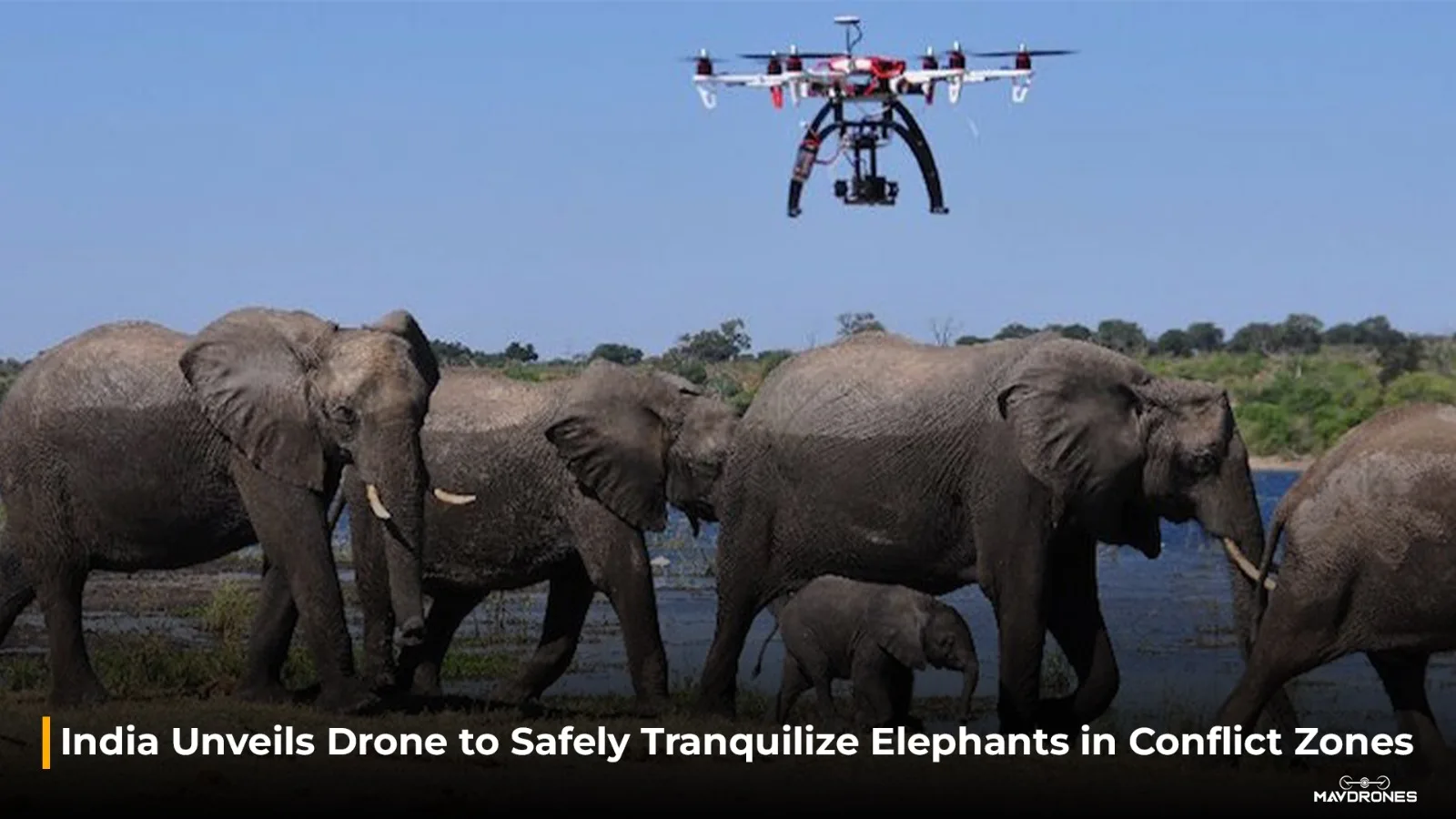
A new drone, designed to tranquilize aggressive elephants from a distance without human intervention, was recently introduced as a significant advancement in the use of indigenous unmanned aerial vehicle (UAV) technology to address human-wildlife conflicts. The unveiling ceremony was held in the presence of Kerala Governor Rajendra Vishwanath Arlekar and Union Minister of State for Petroleum, Natural Gas, and Tourism Suresh Gopi, emphasizing the importance of integrating advanced aerial technology into wildlife conservation efforts.
This specially engineered UAV enables precise and safe elephant darting operations by assisting in aerial tranquilization. The system is intended to reduce risks to forest personnel, minimize disruptions to wildlife, and enhance operational efficiency during crucial interventions involving elephants at risk of becoming a threat due to stress or conflict.
The development of this drone follows the release of Garuda Aerospace’s first UAV for the Tamil Nadu Forest Department nearly a decade ago. The latest iteration reflects years of field research, technological enhancements, and dedicated research focused on supporting conservation efforts.
Garuda Aerospace has previously provided drones to several leading conservation organizations, including the World Wide Fund for Nature (WWF), as well as various forest departments throughout India. These drones have been utilized in activities such as wildlife monitoring, anti-poaching operations, habitat mapping, and rapid-response missions in ecologically sensitive areas.
The unveiling of this advanced drone system is viewed as a significant achievement, symbolizing the company’s continued commitment to responsible innovation in wildlife conservation. The focus remains on developing technology that benefits both animal protection and the safety of surrounding human communities.
As India tackles the rising challenges of human-elephant conflict, drone-assisted darting is seen as a safer, more efficient, and humane alternative to traditional, ground-based methods.