Tethered vs Traditional Drones: Understanding the Key Differences and Benefits

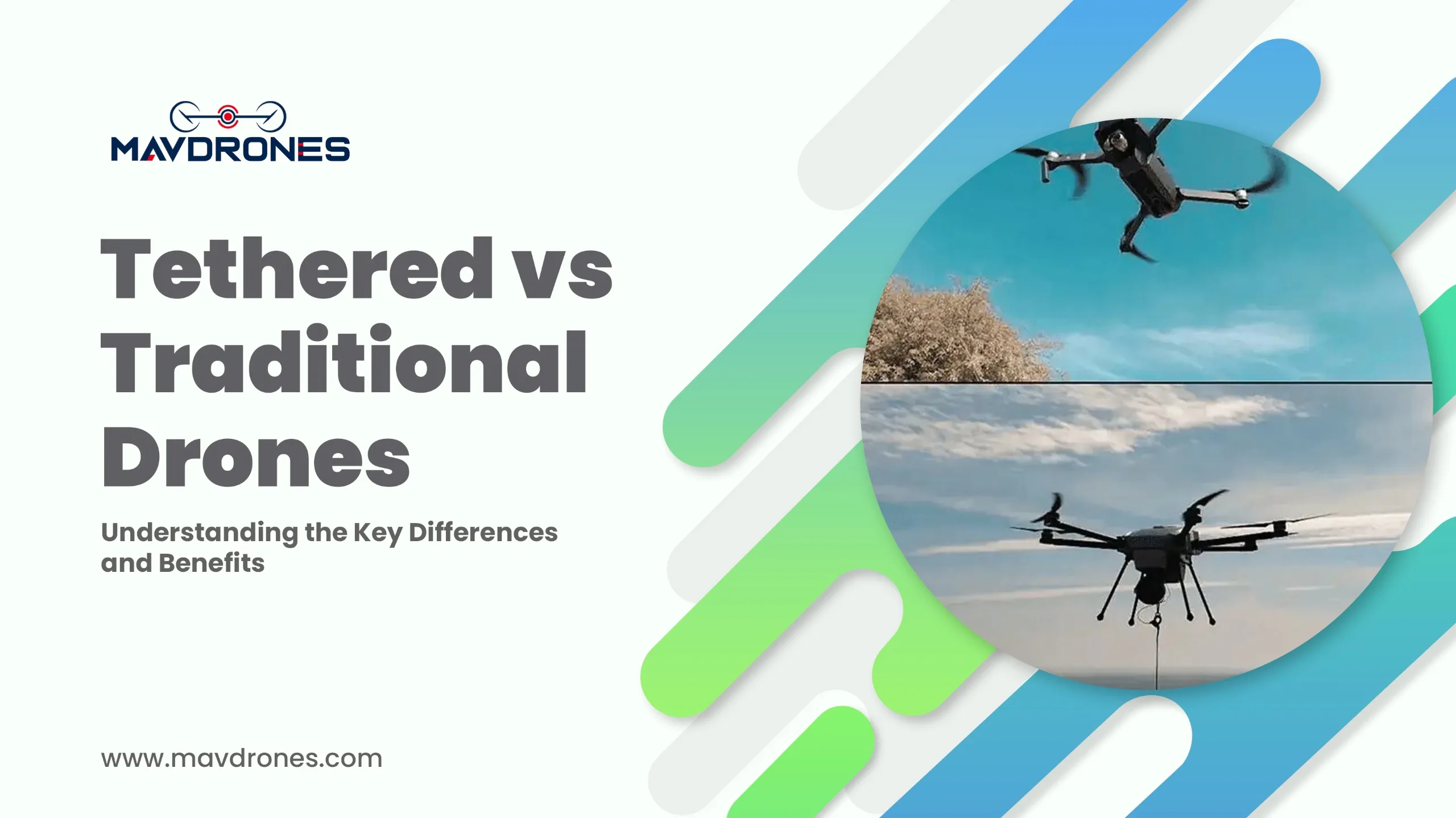
The world of technology related to drones is developing very quickly, providing numerous options to enthusiasts, hobbyists, and professionals alike. One of the most popular discussions among drone users is whether tethered or traditional drones are the better choice. Learning about the differences can guide you toward the right drone for your intended purpose be it recreation, aerial photography, surveillance, or industrial use.
This article will take a comprehensive look at the advantages and disadvantages of tethered and traditional drones. We will examine the technology, performance, and use cases among others. By the time you finish, you will be well versed in the type of drone that is best for your needs.
What Are Tethered Drones?
Tethered drones are connected to the ground with a single cable that provides power as well as data transfer capabilities. Because tethered drones aren’t concerned with battery power the way traditional drones are, they can remain airborne for much longer; tethered drones can remain airborne for as long as they are receiving power via the tether. Drones are tethered to the ground via a single, lightweight cable that is either Kevlar or carbon fiber and is capable of providing the necessary power and data communication link to the drone.
What Are Traditional Drones?
Conversely, standard types of drones are more frequently used for personal, business, and industrial applications. These types of drones run on rechargeable batteries, which are often what limit them, in terms of flight time. Standard drones can be controlled manually, via remote controllers, and automatically, via pre-programmed flight routes. These types of tethered drone system use a mix of GPS, sensors, and cameras for various functions.
Key Differences Between Tethered and Traditional Drones
1. Flight Time and Power Source
Tethered drones versus traditional drones can have their biggest difference be the way in which they are powered. A conventional drone uses a battery that is limited to a specific amount of flight time, which can be anywhere from 20 minutes to 40 minutes depending on the type of model as well as the tasks that are being carried out. Once a drone’s battery is low, the drone must land, recharge, and can cause a limit in the drone’s range during tasks that are long in duration.
For tethered drones, they receive their power through their tethered cable which connects directly to the ground. By this drone operating without the restraints of battery life, they are also able to have much longer flight times. Because of this tethered drone can also be used for things like surveillance tasks or a monitoring tasks for long durations. Because of this tethered drones are also a great option for tasks that require ongoing electrically powered drones for things like monitoring or even power shutdowns during apprehensions of power shutdowns.
2. Mobility and Range
Standard drones provide more freedom when it comes to distance. As they do not have a physical tether connecting them to the ground, they can travel anywhere within a certain distance. That distance can be multiple kilometers, depending on how advanced the drone’s transmission system is and how strong the available GPS signals are.
In contrast, tethered drones have cable lengths that can be anywhere from a few dozen meters to several hundred meters. Because of this, they can’t freely explore large areas the way that traditional drones can. While this is a notable drawback, it does come with a silver lining. Unlike traditional drones, tethered drones do not face the risk of becoming disconnected or losing signals when they travel past the operator’s control range.
3. Data Transmission and Communication
Drones that are tethered are capable of providing better data link reliability when compared to non tethered drones. Because of the physical tether, data transfer of the drone and the ground station is bound to be stable. The tether is critical for applications involving live broadcasts, or in emergencies like disaster response or in surveillance situations that require continuous and undeterred communication and video feed to be available.
In comparison to tethered drones, classic non tethered drones are capable of data transfer in a wireless manner. However, data transfer may be subject to signal loss, or data transfer may be subject to signal interference especially in places that are remote and have a high electronic device population, and in places that are remote or have a high electronic device population. Although newer drones may be equipped with better communication systems in terms of wireless communication like better Wi-Fi, or even LTE or 5 G, networks, connection stability and continuity is still a concern in some places.
4. Weight and Size
Because of the tether mechanisms, tethered drones tend to be bulkier and more complex than traditional drones, which are lightweight and portable. Tether mechanisms have a cable, reel, spool, and power converter, leading to them being more compact and lightweight than traditional drones. Because of the extra bulk tethered drones have, traditional drones are designed to be easily portable, which makes them a preferred option for hobbyists and people who want a device that can be deployed quickly.
Despite the extra bulk tethered drones have, the weight can be justified by the drone being able to fly for extended periods of time and the ability to carry bigger payloads such as industrial sensors, high definition cameras, etc.
5. Use Cases and Applications
Although both tethered drones and conventional drones provide useful services for various sectors, their most suitable use cases vary according to their technological features.
Tethered Drones:
- Security and surveillance: Because tethered drones can remain airborne for long durations, they can be utilized for the monitoring of extensive regions, such as stadiums, critical infrastructures, or border regions.
- Broadcasting and filming: Because of the constant supply of power, tethered drones can be used for filming live aerial footage in scenarios that require long and uninterrupted filming, like broadcasting. Even though the tethered drone price is higher than the traditional drones, still it generates more revenue for the business.
- Emergency response: Search and rescue efforts in emergency situations, as well as the management of natural disasters, can employ tethered drones for aerial monitoring so that ground teams can know what to do in real-time.
- Infrastructure inspections: Tethered drones can be used for the inspection of large infrastructures like bridges, towers, and power lines with as few interruptions as possible.
Traditional Drones:
- Aerial Photography and Filming: Standard drones are popular in the filming and photography industries for aerial shots and general filming and photography purposes.
- Hobbyist Use: A lot of hobbyists enjoy flying standard drones for the flexibility in range that standard drones provide, and the ease of use.
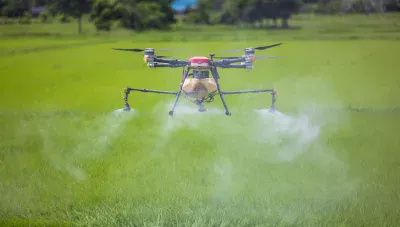
- AgriTech and Surveying: Standard drones are frequently used in agriculture for the purposes of crop monitoring, field surveys, and precision agriculture.
- Mapping and Surveying: Standard drones are also well suited for short duration flights for the purposes of creating high resolution maps and 3D models and for land surveying.
Pros and Cons of Tethered vs Traditional Drones
Tethered Drones:
Pros:
- Endless flight time owing to uninterrupted energy source.
- Consistent data transfer with no potential of signal interruption.
- Perfect for extended periods of surveillance, monitoring, and streaming.
- Able to transport increased loads for more professional uses.
Cons:
- Mobility restrictions caused by tethering.
- Increased weight and bulk result in additional transport challenges.
- Set up costs are higher and tend to be more complicated.
Traditional Drones:
Pros:
- Easy to carry and transport
- Range and mobility can be improved easily.
- Best suited for recreational purposes and short tasks.
- Less expensive than tethered drones.
Cons:
- Due to restrictions on battery life, flight time is limited.
- There is potential for both signal interference and loss of data.
- Frequent recharging or replacement is necessary.
Which One Should You Choose?
Your particular needs and use case will determine whether you need tethered drones or traditional drones. For long-duration activities such as surveillance, monitoring or broadcasting, tethered drones will be a better option. They are better for extended flight time, stability and continuous power. In contrast, traditional drones will be more suitable in case you need something lightweight and portable. For activities such as recreation, short-range aerial photography or short-range surveying, a traditional drone will work better.
In conclusion, both tethered and traditional drones possess distinct advantages and disadvantages. Regardless of whether you fly drones for leisure or for professional, commercial, or industrial purposes, understanding these differences will guide you in making an educated choice.