How Drones Became the Backbone of Modern Surveying and Inspection?

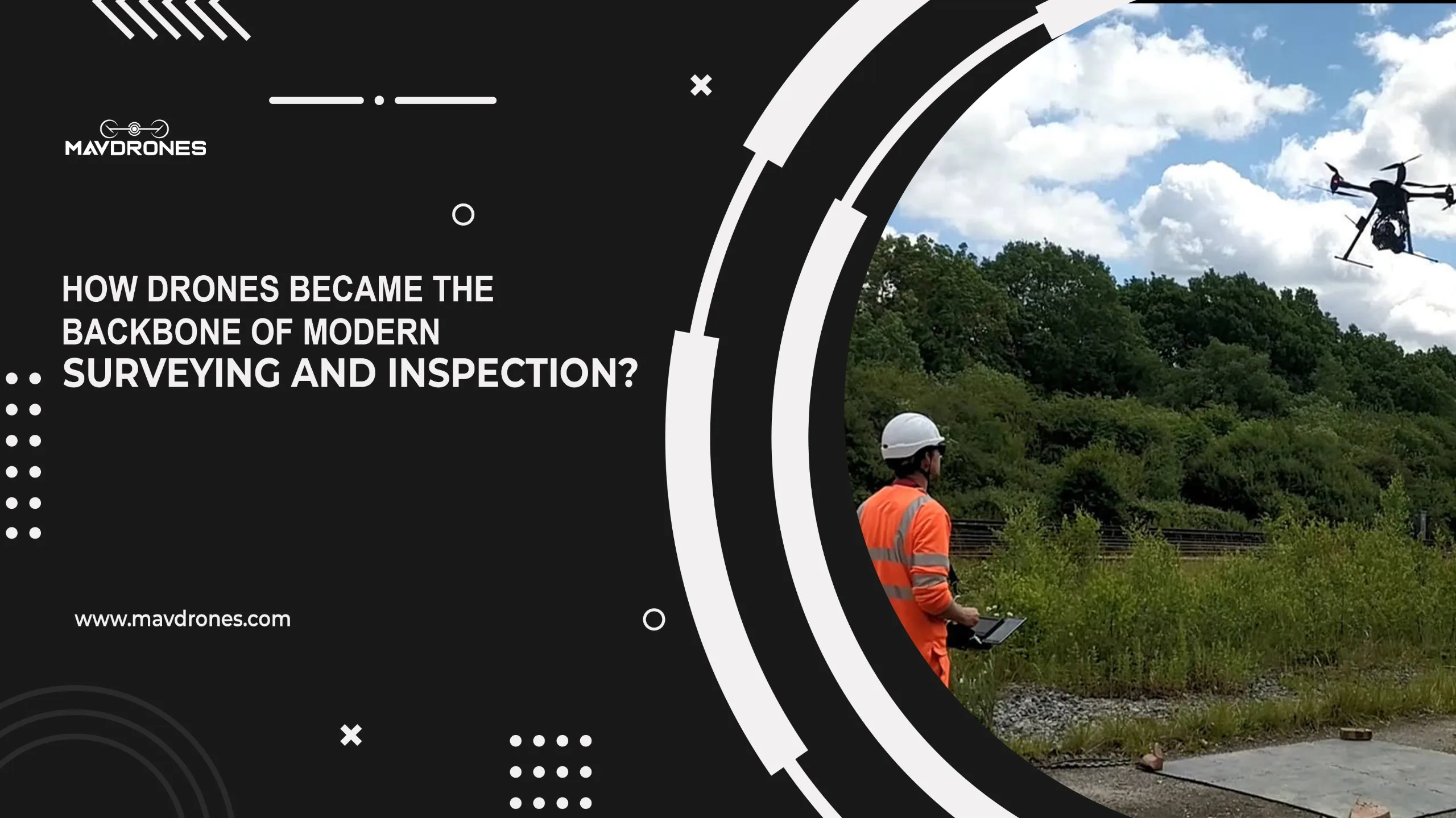
Drone technology has changed over the last ten years from a futuristic novelty to a vital tool in contemporary industries. Drones have become an essential component of surveying and inspection procedures in India and around the world, from tall skyscrapers to expansive agricultural fields. Drones are now the mainstay of contemporary surveying and inspection because of their capacity to reach difficult-to-reach locations, collect high-resolution data, and significantly cut down on time and labor.
The Shift from Traditional Methods
In the past, surveying and inspection have been labor-intensive, time-consuming, and frequently dangerous. The use of heavy machinery, manual measuring instruments, and physical access to hazardous or isolated areas were all necessary for engineers and technicians. For instance:
- High-rise buildings were inspected during construction using scaffolding or cranes.
- It took days to manually evaluate the health of crops in agriculture.
- Technicians in the utility and power industries scaled transmission towers or reached pipelines in difficult-to-reach places.
- In addition to being slow, these antiquated techniques also presented safety hazards and were prone to human error.
- These antiquated systems were upended by drone technology, a game-changer.

Why Drones Excel at Surveying and Inspection?
Unmanned Aerial Vehicles (UAVs), commonly referred to as drones, offer a potent blend of speed, accuracy, and safety. Professionals can make well-informed decisions more quickly thanks to the variety of sensors, cameras, and mapping tools they have.
1. Speed and Efficiency
A drone can now finish a task in a few hours that would take a ground survey team several days. In less than a day, for example, a drone can map a hundred acres of farmland or examine the facade of a multi-story building, saving time and money.
2. High-Resolution Imaging
LiDAR sensors, thermal imaging, multispectral sensors, and 4K cameras are all standard on modern drones. With centimeter-level accuracy, these tools produce rich, useful data. Drones offer an unparalleled level of detail for detecting heat leaks, crop stress, and building cracks.
3. Safety First
Bridges, chimneys, transmission lines, and industrial facilities are among the hazardous and frequently inaccessible locations that require surveying. Drones reduce the risk to human life by enabling remote completion of such tasks. It is now safer, quicker, and less expensive to conduct safety inspections of tall buildings or confined spaces.
4. Real-Time Data and Analytics
Engineers and managers can now make quick decisions from a distance thanks to the real-time video feeds and data streaming that many drones offer. Drones offer insights that optimize planning and execution when combined with BIM (Building Information Modeling) and GIS (Geographic Information Systems).
Real-World Applications in India
India is seeing a boom in the use of drone technology across industries due to its rapidly expanding infrastructure and extensive agricultural needs.
1. Infrastructure Development
Road construction, bridge inspections, railroad surveys, and smart city planning are all common uses for drones. Large-scale infrastructure projects require highly accurate topographical maps, which are produced by survey-grade drones outfitted with RTK/PPK systems.
2. Precision Agriculture
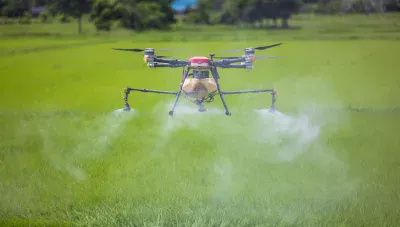
Drones are transforming farming in rural India. Drones with multispectral cameras evaluate soil quality, crop health, and irrigation requirements. This increases yields and lowers input costs by allowing farmers to apply pesticides or fertilizers only where necessary.
3. Power and Utility Inspections
Drones are used by electricity companies and solar plant operators to inspect solar panels, substations, and power lines without stopping operations. Before failures occur, thermal cameras can identify overheating or damaged parts that can be fixed.
4. Urban Planning and Land Surveys
Drones are used by local governments and urban planners for quick and precise land surveys, encroachment detection, and planning. By using precise geospatial data, drones aid in the digitization of land records and the resolution of disputes.
Cost-Benefit Analysis
Drone deployment has become much less expensive, and their capabilities have increased. Depending on features, a professional-grade surveying drone in India can cost anywhere from ₹2.5 lakhs to ₹25 lakhs. The return on investment, however, is rapid and typically occurs in the first few significant projects.
The following are important cost-saving benefits:
- Decreased requirements for personnel and equipment
- Quicker turnaround
- Reduced expenses for safety risks and insurance
- Fewer inspection-related shutdowns
- Improved precision, lowering errors or rework
The Road Ahead
Drone usage is growing quickly in India thanks to the country’s benevolent drone regulations, which are outlined in the Drone Rules 2021 and the Digital Sky platform. Drones are being used by both startups and large corporations for a variety of tasks, such as mining surveys and real estate mapping.
In the upcoming years, we can anticipate even more intelligent, autonomous, and data-driven drone operations as cloud computing, AI, and machine learning continue to be integrated with drone platforms.
Final Thoughts
Drones have revolutionized the surveying and inspection industry, making it the new norm rather than a passing fad. Drones offer the perfect answer as industries strive for increased safety, accuracy, and speed of execution.
Adopting drone technology is not only an improvement, but also a strategic necessity, regardless of your industry—agriculture, infrastructure, energy, or construction. Businesses that take advantage of this innovation as soon as possible will maintain their lead in a world that is becoming more digital and competitive.

CEO, Mavdrones
Pradipta V Mukherjee is the visionary CEO of Mavdrones & Drone Pathshala, driving innovation and growth in the drone industry. With a passion for advanced technology, he leads the company's strategic direction, ensuring Mavdrones stays at the forefront of drone solutions. Under his leadership, Mavdrones has achieved remarkable success, including winning the 'Best Innovation and Technology in Drone Industry' award from ASSOCHAM. Pradipta is committed to revolutionizing the industry through advanced UAV technology, fostering a culture of excellence and forward-thinking within the organization.