How Flood-Hit Farmers in Tamil Nadu Are Using Drones to Bounce Back!

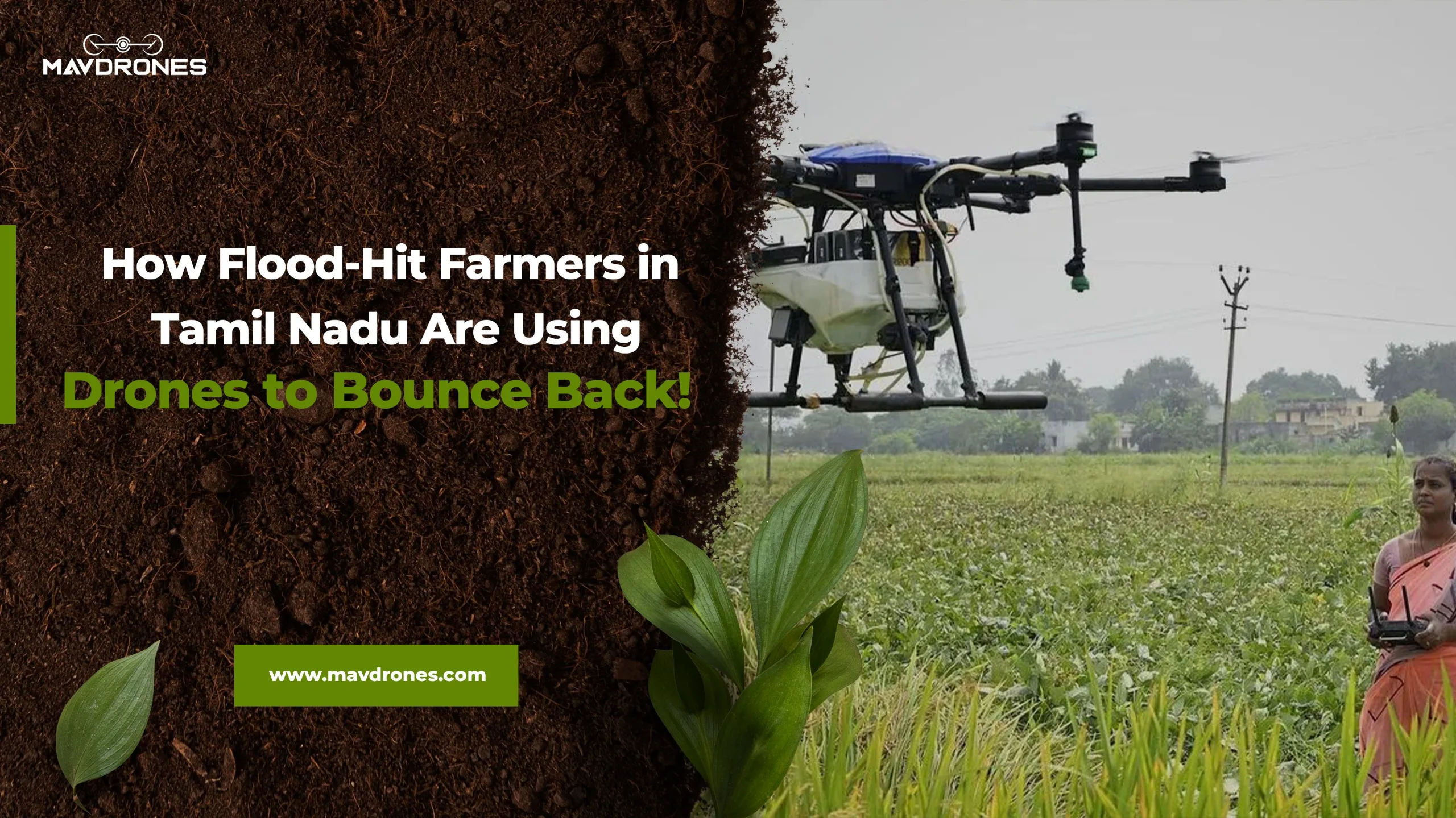
A promising crop cycle became a struggle for survival when Tamil Nadu’s farmlands were inundated with unrelenting rains. Rice, sugarcane, and pulse fields were flooded, endangering people’s livelihoods and the availability of food. However, in the midst of this crisis, drones have emerged as a novel solution.
For farmers navigating unpredictable weather, what was once thought of as high-tech luxury has become an essential lifeline. Drones are increasingly being used in Tamil Nadu to plan recovery, evaluate damage, and increase resilience.
Unseasonal Rains and Their Impact on Crops
For Indian agriculture, the monsoon season has always been crucial. However, in recent years, farming has become even more uncertain due to its unpredictable nature. During the height of the growing season, Tamil Nadu recently experienced heavy rainfall, submerging thousands of hectares.
In areas affected by flooding, traditional response techniques such as manual surveys and field inspections are frequently too slow and challenging. It is almost impossible to get a complete picture of crop loss when roads are blocked and the land becomes swampy.
Drone technology is filling that gap.

Drones: The Game-Changer for Flood Monitoring
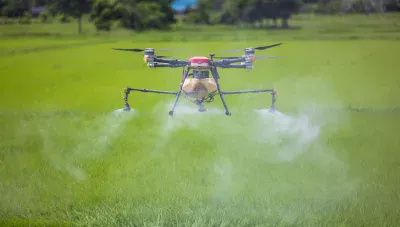
Farmers no longer have to enter soggy fields to get a bird’s-eye view of their land thanks to drones. Drones equipped with sophisticated sensors and high-resolution cameras can quickly scan vast areas of farmland and gather comprehensive information about crop conditions.
Drones can now detect crop stress, plant health, and moisture levels before symptoms are apparent to the human eye thanks to multispectral and thermal sensors, which extend beyond photography.
In the wake of floods, this degree of accuracy is turning out to be crucial.
How Drones Are Assisting Tamil Nadu’s Farmers?
Farmers in impacted districts are utilizing drone technology in the following ways:
- Mapping Flooded Areas: Aerial maps produced by drones indicate which areas of the land are flooded and where drainage is necessary.
- Evaluating Crop Damage: Farmers can determine precisely which areas are salvageable by taking pictures of the crops both before and after the rains.
- Accelerated Decision Making: Farmers can obtain data that would take days to collect manually within a few hours of a flight.
- Supporting Claims and Relief Applications: To confirm losses and swiftly distribute compensation, government agencies and insurance providers are depending more and more on drone data.
From Innovation to Accessibility
Drones were once thought to be an expensive innovation, but thanks to a number of initiatives, even small-scale farmers in Tamil Nadu can now afford them:
- Drone-as-a-Service (DaaS): Pay-per-use drone monitoring services are being provided by regional startups and agritech companies.
- Cooperatives and Farmer Collectives: By combining their resources, groups of farmers can now rent drones to conduct joint field inspections.
- Training Programs: To acquaint farmers with drone operations and data interpretation, agricultural universities and state authorities have started offering training programs.
An intimidating piece of technology is rapidly becoming a useful tool, particularly in times of crisis.
Drones and Government Support
Additionally, government agencies are starting to see the benefits of drone data. Drone imagery is now being used by Tamil Nadu agriculture officials to:
- Cross-check crop insurance claims made by farmers.
- Quicken the distribution of disaster aid.
- Continue to use data-driven and transparent reporting methods.
In addition to speeding up the system, this integration makes it more equitable for people who rely on prompt assistance.
Impact on the Ground: Real Stories, Real Benefits
Early users of drone services have experienced quantifiable advantages in areas like Thanjavur and Cuddalore. Because they had precise data within 24 hours of the rains ceasing, some farmers were able to replant fields two weeks earlier than nearby farms.
Others saved a portion of their harvest that might have been written off by using the drone maps to pinpoint specific areas of their fields where drainage was feasible.
Drones are now viewed as practical tools that are assisting farmers in recovering more quickly and efficiently rather than as futuristic devices.
Looking Ahead: The Future of Drones in Agriculture
Monitoring floods is only the first step. In the upcoming years, drones are anticipated to become much more prevalent in Indian agriculture:
- Applying pesticides and fertilizers precisely
- Planting seeds automatically
- Crop health monitoring and yield forecasting
- Integration with farm management software in real time
Drones and other technologies will be essential in assisting farmers in adapting to the increasingly unpredictable weather patterns brought on by climate change and making well-informed decisions under duress.
Conclusion
The resilience of farmers and the systems that support them has been put to the test by the recent floods in Tamil Nadu. The human reaction doesn’t have to be unpredictable, even though nature might be.
In addition to reacting more quickly, farmers who use drones are also making better plans, cutting down on losses, and getting ready for a future that is increasingly reliant on technology. Drones are poised to become a mainstay of Indian farming as more communities embrace this innovation, particularly during emergencies.
FAQs
1. How are drones used after floods in farming areas?
Without the need for manual inspection, they evaluate water damage, pinpoint impacted areas, and assist in developing recovery plans.
2. Are drones affordable for small farmers?
Yes, small and marginal farmers can now use drones thanks to rental services and cooperative usage.
3. What types of data do drones collect?
They measure field stress, flooding levels, and crop health by capturing thermal, multispectral, and visual data.
4. Do drones help with insurance claims?
Of course. Maps and photos produced by drones are becoming more widely recognized as reliable evidence of crop loss and compensation.
5. Is drone training available for farmers in Tamil Nadu?
Indeed, training sessions and demonstration programs are being held by numerous agricultural departments and universities.


CEO, Mavdrones
Pradipta V Mukherjee is the visionary CEO of Mavdrones & Drone Pathshala, driving innovation and growth in the drone industry. With a passion for advanced technology, he leads the company's strategic direction, ensuring Mavdrones stays at the forefront of drone solutions. Under his leadership, Mavdrones has achieved remarkable success, including winning the 'Best Innovation and Technology in Drone Industry' award from ASSOCHAM. Pradipta is committed to revolutionizing the industry through advanced UAV technology, fostering a culture of excellence and forward-thinking within the organization.