

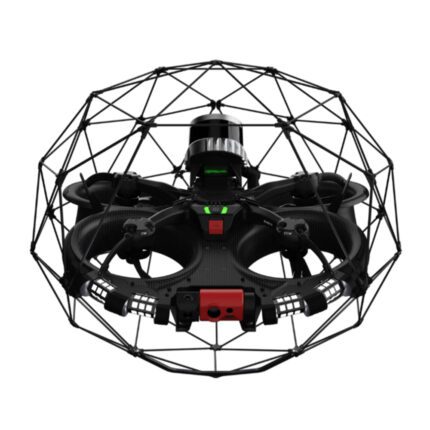


Industrial Drones: Transforming Operations Across Industries
Businesses now operate, inspect, monitor, and analyze their assets in a completely new way thanks to the emergence of industrial drones. Drones, which were once thought of as purely recreational devices, have developed into extremely specialized instruments intended to provide accuracy, effectiveness, and safety in industrial settings. Industrial drones are now at the center of contemporary innovation, boosting productivity and cost savings across industries from infrastructure inspection to logistics and agriculture.
Drone technology is being quickly adopted by industries in India and other countries to improve data accuracy, minimize human risks, and optimize operations. Industrial drones are now essential tools for businesses looking to maintain their competitiveness in an increasingly digital economy thanks to developments in automation, artificial intelligence, and sensor integration.
What Are Industrial Drones?
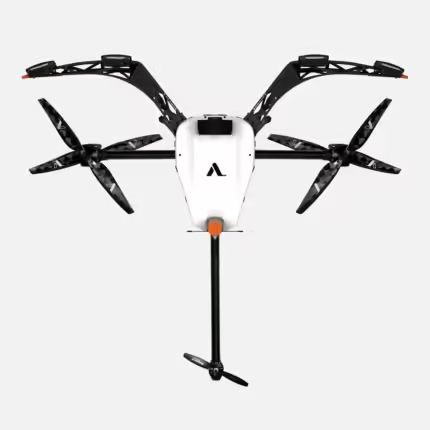
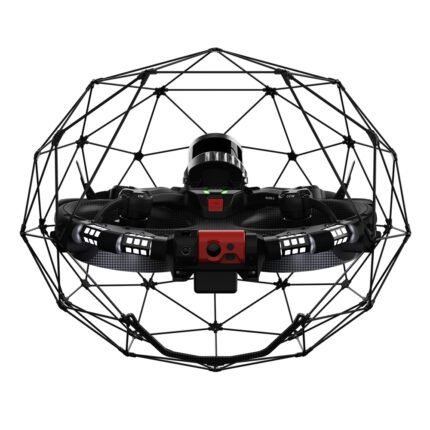
Unmanned aerial vehicles (UAVs) created especially for commercial and industrial uses are known as industrial drones. They are distinguished from consumer drones by their sturdy construction, long flight times, large payload capacities, and sophisticated sensors that can handle challenging tasks.
These drones are designed to satisfy the exacting requirements of sectors like public safety, mining, construction, energy, and agriculture. Their ability to transport specialized payloads such as LiDAR scanners, thermal cameras, multispectral sensors, and high-resolution imaging systems enables a variety of uses, from material delivery and asset inspection to mapping and surveying.
Industrial drones are becoming more and more integrated with cloud-based data platforms and AI-driven analytics as a result of ongoing technological advancements, transforming unprocessed aerial data into real-time actionable insights.
The Growing Importance of Industrial Drones
The need for safer, quicker, and more accurate data collection has led to a surge in the demand for industrial drones worldwide. Conventional techniques for delivery, surveying, or inspection frequently call for a large investment of time, money, and labor. These issues are addressed by industrial drones, which offer an aerial viewpoint that improves productivity and security.
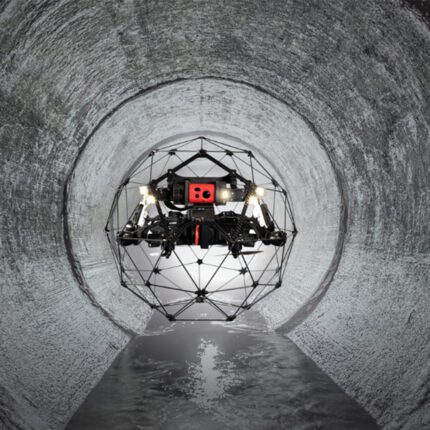
Drones allow for remote inspections in industries like construction, power generation, and oil and gas, which lessens the need for human workers to enter dangerous areas. This reduces the chance of accidents while also saving time and money.
By encouraging domestic production and commercial use, the Indian government's Drone Rules 2021 and the Production-Linked Incentive (PLI) Scheme for Drones have further accelerated adoption. Industrial drones are emerging as a major facilitator of the Industry 4.0 revolution as industries continue to digitize their operations.
Applications of Industrial Drones Across Sectors
Construction and Infrastructure
Drones make project management easier in the construction industry by facilitating volumetric analysis, progress tracking, and aerial mapping. Engineers are able to take precise topographic maps and 3D models, which aid in locating design flaws and efficiently allocating resources. Large construction sites can be viewed in real time by industrial drones, which enhances coordination and cuts down on delays.
Energy and Power
Industrial drones are used by power utilities and renewable energy firms to inspect solar panels, wind turbines, and transmission lines. Drones that use thermal imaging can identify damaged parts or bad connections, averting expensive outages. Additionally, they do away with the necessity of risky manual inspections in high altitudes or isolated areas.
Agriculture
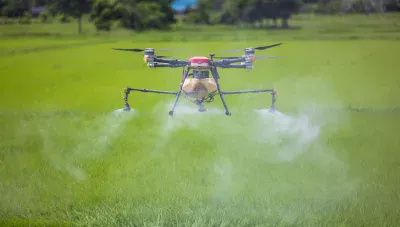
Drones are essential for crop monitoring, irrigation control, and pesticide application in precision agriculture. Industrial drones with multispectral sensors examine soil and plant health, enabling farmers to make informed decisions. This guarantees sustainable farming methods, boosts yield, and decreases waste.
Mining and Quarrying
Drones are used by mining companies for pit inspections, volumetric measurements, and terrain mapping. Industrial drones can safely enter areas that are inaccessible and take high-resolution pictures that help with resource estimation and planning. As a result, there is less operational downtime, increased productivity, and enhanced safety.
Logistics and Delivery
Industrial drones are being investigated by the logistics sector for warehouse inventory control and last-mile delivery. Delivery times and operating expenses can be decreased by using drones to swiftly move small items, paperwork, or medical supplies over short distances. Drone delivery in India appears to have a bright future thanks to ongoing regulatory improvements.
Surveillance and Security
Industrial drones offer live aerial feeds for security monitoring in ports, large facilities, and industrial plants. They improve situational awareness during emergencies or security breaches because they are outfitted with thermal and night vision capabilities.
Key Advantages of Industrial Drones
Beyond just being convenient, industrial drones have the potential to revolutionize how businesses approach efficiency, accuracy, and safety.
- Enhanced Safety: In hazardous or difficult-to-reach locations like high towers, offshore rigs, and mines, drones eliminate the need for manual inspections.
- Increased Efficiency: In a fraction of the time needed by conventional methods, they complete intricate surveying and inspection tasks.
- Cost Reduction: Industrial drones provide businesses with a greater return on investment by reducing labor, equipment, and time costs.
- Accurate Data Collection: Drones with sophisticated sensors are able to collect accurate data, which enhances project planning and decision-making.
- Sustainability: Compared to conventional heavy machinery-based methods, drone-based operations are more environmentally friendly and energy-efficient.
Technological Advancements in Industrial Drones
Thanks to advancements in hardware, software, and AI integration, modern industrial drones are developing quickly. Modern drones are outfitted with capabilities that improve operations' intelligence and safety, such as autonomous navigation, obstacle avoidance, and AI-based image recognition.
While thermal and hyperspectral imaging broadens applications in energy audits, agriculture, and disaster response, LiDAR-equipped drones allow mapping and modeling with centimeter-level accuracy. Real-time access and analysis of drone-captured data is made possible by integration with cloud platforms.
The creation of hybrid and long-endurance drones, which combine fixed-wing and multirotor designs to provide longer flight times and higher payload capacities, is another innovation. They are therefore perfect for extensive industrial tasks like border surveillance or pipeline inspection.
Industrial Drones in the Indian Market
Thanks to a strong tech ecosystem and advantageous government regulations, India has become a rapidly expanding market for industrial drones. High-performance drones designed to meet regional industrial needs are being produced by a number of Indian startups and manufacturers.
Companies now find it simpler to obtain permits, carry out operations, and incorporate drones into business processes thanks to the government's relaxed drone regulations. Innovation and entrepreneurship in the industry are being further stimulated by programs like Drone Shakti and the Digital Sky Platform.
Industrial drones manufactured in India are currently being exported to international markets, demonstrating the nation's expanding manufacturing and technological innovation capabilities. India is positioned to become a global center for drone-based industrial automation as a result of the widespread adoption of drone solutions by sectors like mining, oil and gas, and construction.
The Future of Industrial Drones
Increased autonomy, connectivity, and intelligence are key components of industrial drones' future. Drones will develop from remote-controlled instruments to completely autonomous systems that can accomplish challenging tasks with little assistance from humans as AI, IoT, and 5G technologies advance.
Swarm intelligence will be a feature of future drones that will enable multiple UAVs to collaborate on large-scale projects. Real-time analytics will be possible without a significant reliance on cloud computing as data processing shifts closer to the edge.
Industrial drones will become more capable and adaptable as battery endurance, efficiency, and payload capacity continue to advance. Their role in industries like logistics, defense, healthcare, and disaster response will grow even more as a result of these developments.
Why Businesses Are Investing in Industrial Drones?
Businesses all over the world are aware of industrial drones' competitive advantage. They facilitate better resource management, quicker execution, and more intelligent decision-making. Drones assist companies in maintaining operational excellence while guaranteeing sustainability and safety by offering precise, real-time insights.
Furthermore, companies of all sizes can now more easily incorporate drones into their workflows thanks to the falling cost of drone technology and the expanding ecosystem of software platforms. Drones are now a strategic necessity rather than an option for industries centered on digital transformation.
Conclusion
In the modern era, industrial drones are changing the way industries function. Their unparalleled accuracy, effectiveness, and versatility have made them indispensable instruments for security, logistics, mapping, and inspection. Businesses in India now have more chances to use drone technology for expansion and innovation thanks to the country's booming domestic drone industry and supportive regulations.
Industrial drones will continue to be a key component of advancement as industries change, bridging the gap between productivity and technology. They are positioned as a key player in the upcoming wave of industrial transformation because of their capacity to improve sustainability, safety, and efficiency.