







Drone Parts: Essential Components for Every Drone Enthusiast
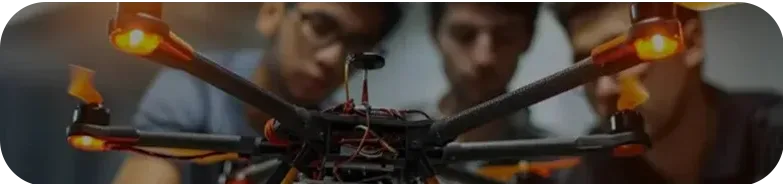
Demand for dependable and superior drone parts has increased due to the widespread use of drones in sectors like defense, logistics, filmmaking, and agriculture. Drones are more than just sophisticated devices; they are a conglomeration of meticulously designed parts that cooperate to provide performance, stability, and efficiency. Understanding drone parts is essential to maximizing the potential of unmanned aerial systems, whether you're building a custom drone, fixing an existing model, or improving your current setup.
Understanding Drone Parts and Their Importance
Each drone's performance in the air is determined by a network of interconnected components. Every component, from the battery that runs the entire system to the propellers that create lift, is essential to a successful and safe flight. Selecting the appropriate drone parts is important for increasing functionality, prolonging flight time, and optimizing return on investment in addition to replacing damaged parts.
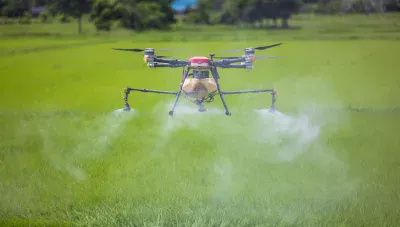
Both novices and experts need high-quality drone parts. Durable parts translate into smoother flights and fewer crashes for hobbyists. They guarantee dependability for commercial users in crucial applications such as mapping, aerial photography, surveying, and agricultural spraying.
Commonly Used Drone Parts
A number of essential parts make up modern drones, and they all function flawlessly together. The drone frame, which offers the structural support, is the most obvious of these. Depending on whether the drone is intended for racing, photography, or industrial use, the frames have different sizes and designs.
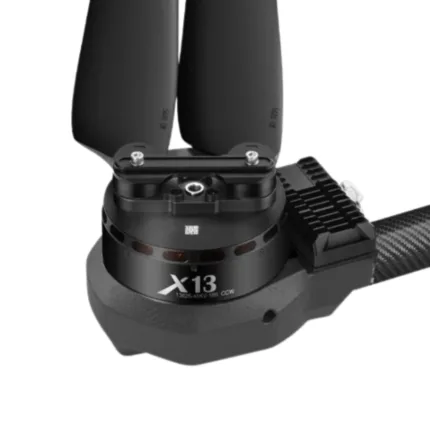
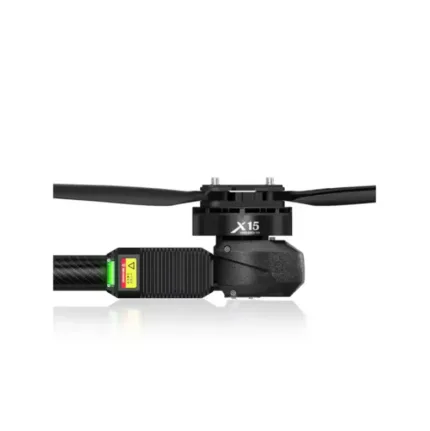
The motor, which transforms electrical energy into thrust, is another essential component. Propellers work in tandem with motors to generate lift and maintain the drone's altitude. Efficiency, maneuverability, and speed are all impacted by propeller size and design.
One of the most important components of a drone is the battery, which controls power output and flight duration. Lithium polymer (LiPo) batteries, which provide lightweight designs with high energy density, are used in the majority of drones.
The drone's brain is its flight controller. They handle navigation, altitude control, and flight stabilization by processing inputs from the pilot and onboard sensors. To ensure smooth operation, electronic speed controllers (ESCs) work in tandem with them to control the power supplied to each motor.
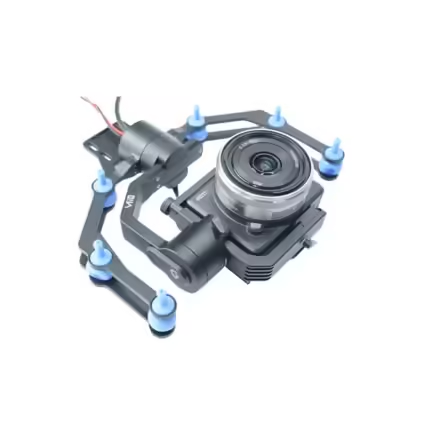
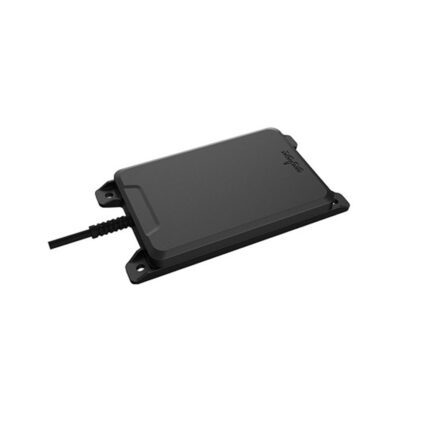
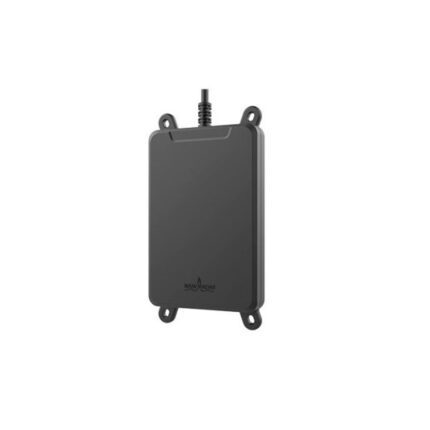
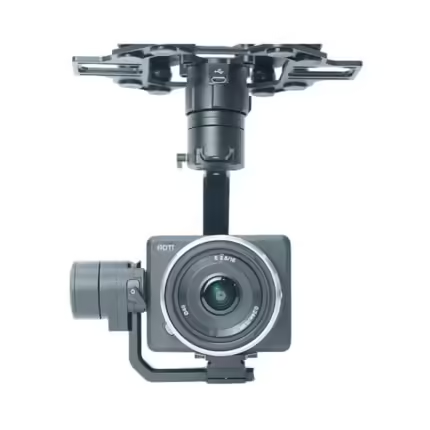
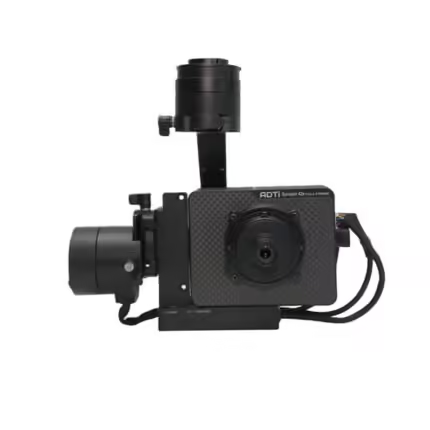
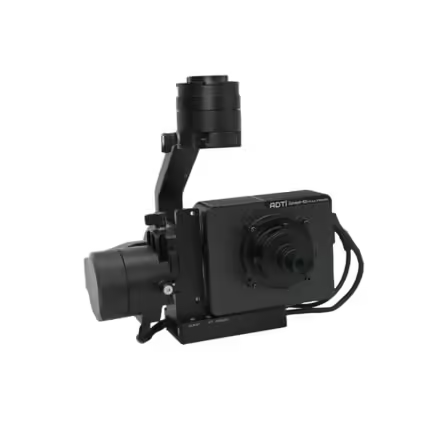
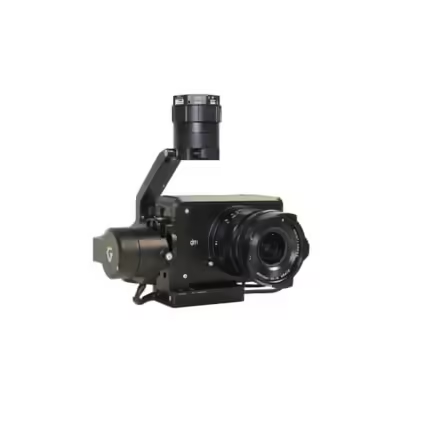
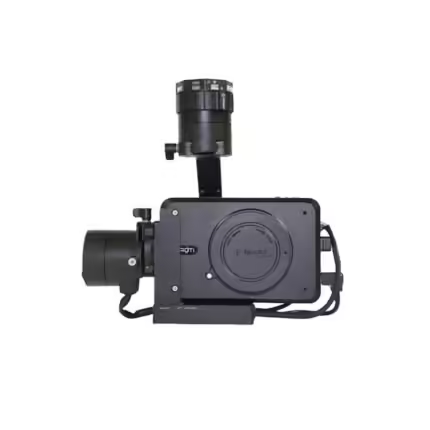
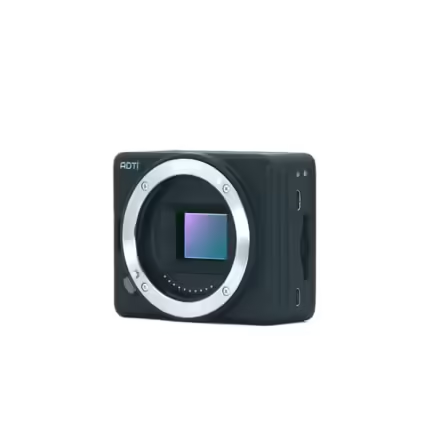
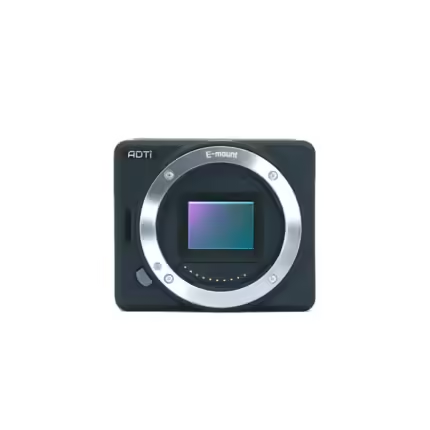
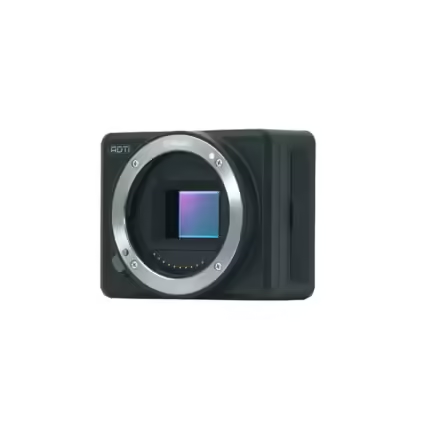
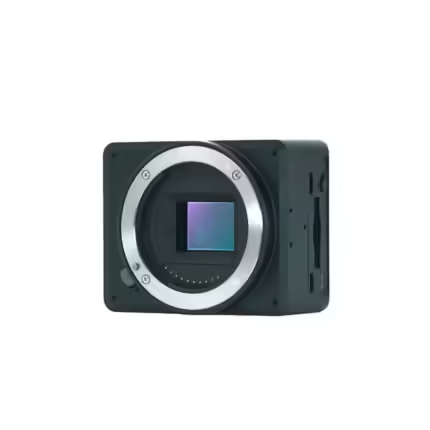
The GPS module for navigation, cameras for aerial photography, and gimbals for video stabilization are additional crucial drone components. These elements work together to create drones that are useful for both personal and professional applications.
Why Quality Drone Parts Matter?
The quality of drone parts can have a big impact on how well a drone is built or upgraded. Poor performance, decreased safety, and more frequent repairs are frequently caused by subpar parts. Conversely, high-quality components increase drone longevity, improve flight stability, and lower maintenance expenses.
For instance, a sturdy propeller reduces noise and vibrations, while a top-notch motor offers steady thrust and economical energy use. In a similar vein, sophisticated flight controllers guarantee accurate maneuverability and lower the likelihood of accidents in midair. Purchasing dependable drone parts gives users the assurance that their devices will operate without hiccups, even under trying circumstances.
Applications of Drone Parts in Different Industries
Because drones are utilized in so many different industries, there is an increasing demand for drone parts. In filmmaking and photography, drones rely on specialized cameras, gimbals, and stabilizers to capture cinematic aerial shots. Drones in agriculture need sensors, sprayers, and bigger batteries in order to effectively cover large farmlands.
Strong frames, large-capacity batteries, and reliable navigation systems are essential for delivery drones, which are being utilized more and more in logistics. Drones in defense and surveillance require night vision systems, thermal imaging cameras, and secure communication modules in order to perform their missions efficiently.
Drone parts vary depending on the application, which emphasizes how crucial it is to modify drones to meet particular requirements.
The Evolution of Drone Parts
Over the past ten years, both drone technology and the components that go into these devices have rapidly advanced. In the past, consumer drones were straightforward machines with simple motors and brief battery life. Advanced composite frames, AI-powered flight controllers, obstacle detection sensors, and long-lasting batteries are all features of modern drones.
Innovation in electronics, software, and materials science propels the ongoing development of drone components. Drone parts have changed to satisfy contemporary needs; carbon fiber frames, brushless motors, and smart batteries are just a few examples. These developments not only improve performance but also open up drones to the general public.
Challenges in Choosing the Right Drone Parts
It can be difficult to choose the best drone parts when there are so many options on the market. Since not every part fits every model, compatibility is frequently the first obstacle. For example, instability may result from using propellers that are too big for the drone's frame. Likewise, selecting a battery with the incorrect voltage can harm the motors or flight controller.
Another difficulty is cost. Although inexpensive parts might be alluring, quality and durability are frequently compromised. Premium parts, on the other hand, can be pricey but offer superior longevity and performance. Making the best decision requires striking a balance between quality and affordability.
Last but not least, availability matters. Users may need to source certain specialized drone parts from reliable online suppliers because they may not be readily available in local markets.
Future of Drone Parts
As innovation propels the industry forward, the future of drone parts appears bright. Longer flight times and quicker charging are anticipated with next-generation batteries. Motor efficiency will increase, allowing for more thrust with less energy usage.
Drones will become more autonomous and able to perform complex tasks as a result of AI-powered flight controllers and machine learning. Frames will remain lightweight while becoming stronger and more durable thanks to lightweight alloys and advanced composites.
The need for specialized components like sensors, thermal cameras, and sophisticated navigation modules will only increase as more industries depend on drones for vital tasks.
Why Businesses and Hobbyists Need Reliable Drone Parts?
Reliable drone parts are crucial to reaching your objectives, whether you are a professional using drones for business or a hobbyist flying for fun. Durable components translate into fewer crashes, improved control, and a more pleasurable flying experience for hobbyists. Businesses benefit from higher productivity, increased efficiency, and fewer breakdowns when they use high-quality components.
In the fiercely competitive drone market, having the correct components can mean the difference between success and failure. Investing in high-quality parts gives businesses an advantage by guaranteeing that their drones operate reliably in a variety of scenarios. On the other hand, hobbyists can rest easy knowing that their drone is secure and prepared for exploration.
Conclusion
Every drone, from entry-level models to sophisticated professional systems, is built on drone parts. For performance, stability, and safety to be delivered, each component is essential. It is impossible to overestimate the significance of choosing the correct parts as drones continue to influence daily activities and industries.
Whether you are taking amazing aerial photos, surveying agricultural fields, or conducting industrial inspections, investing in high-quality drone parts guarantees that your equipment operates at its peak efficiency. Drones' future depends on the development of the components that drive them as much as on the technology itself.