Drones to Play Central Role in Indian Army’s Future Combat Operations

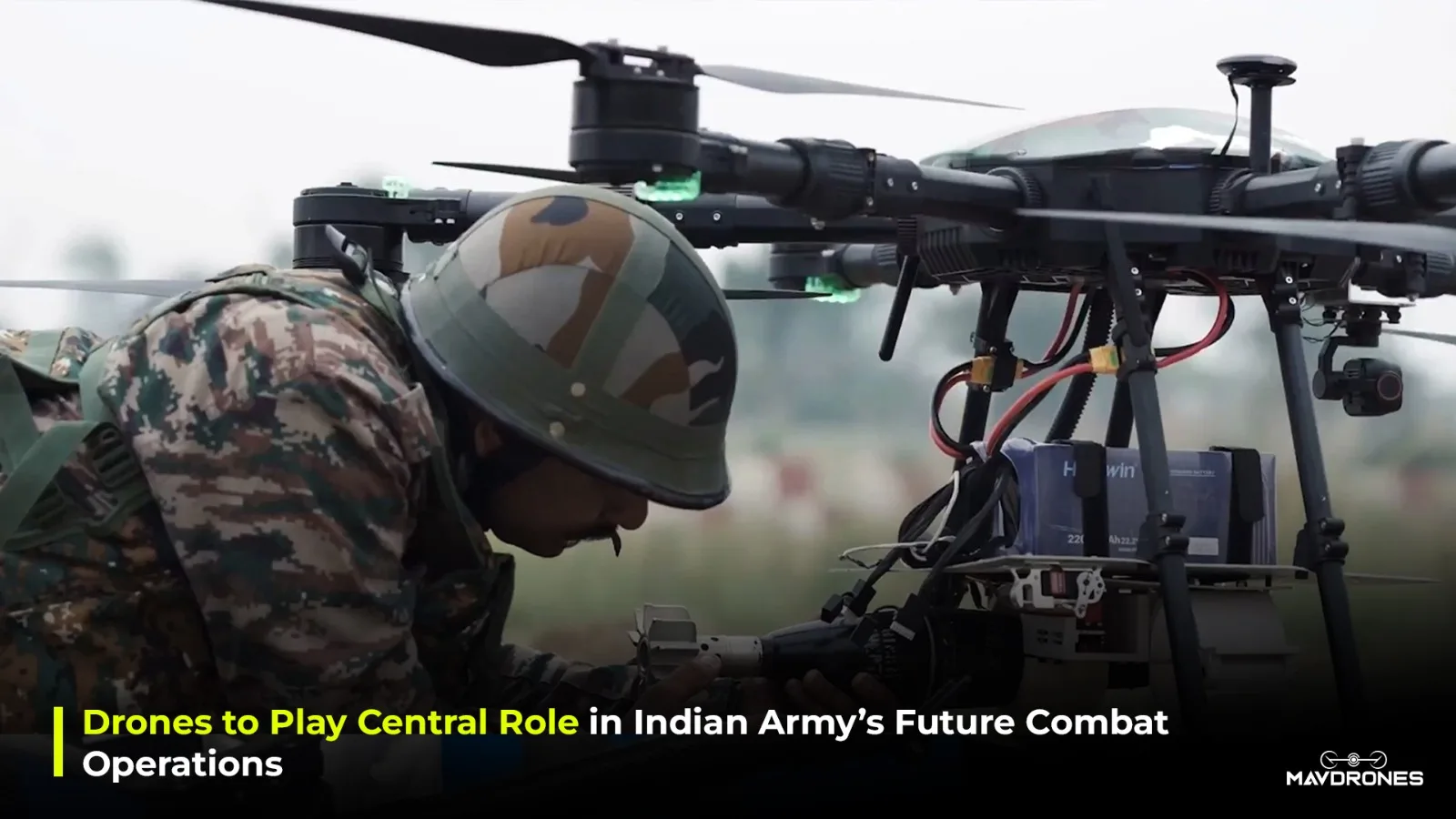
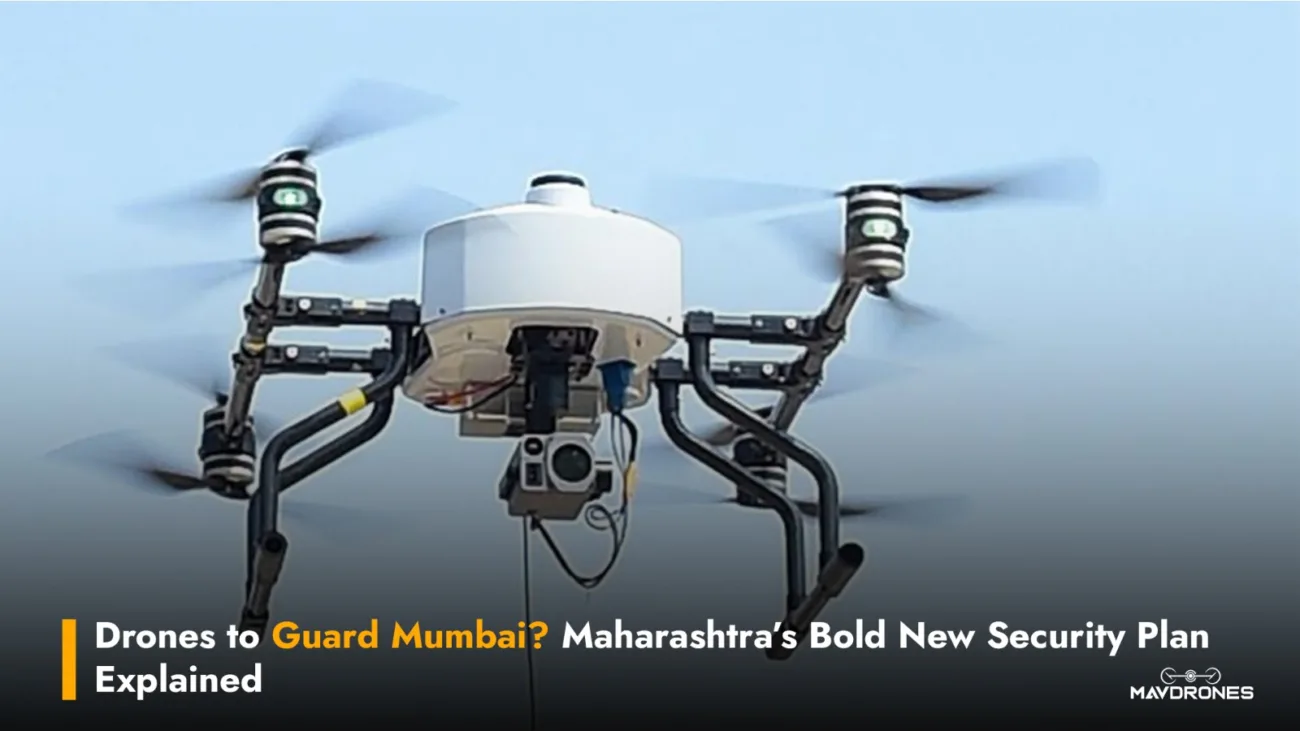
In order to modernize its operational capabilities and incorporate cutting-edge technologies like drones and counter-drone systems into the very center of its combat structure, the Indian Army is undergoing a major organizational transformation. The modifications are being planned as part of a broader initiative to provide battalions with future-oriented systems across multiple arms.
The integration of Unmanned Aerial Vehicles (UAVs) and counter-UAV systems at the battalion level, where they will be regarded as regular weapon systems instead of auxiliary tools, is a key component of the reorganization. Nowadays, soldiers assigned to other roles handle drone operations as secondary duties, which frequently results in divided attention and decreased effectiveness.
Battalions are introducing specialized drone units to combat this. The deployment and operation of UAVs will be the main responsibility of the specially trained individuals who will staff these units. In order to minimize the distraction from critical combat tasks, a clear directive has been issued to reorganize internal staffing so that a set number of soldiers are solely assigned to drone operations.
Platoon and company-level surveillance drones are being implemented in the infantry, and structural adjustments are anticipated to reallocate up to 70 soldiers per unit. To account for these changes, a typical infantry battalion will have 36 fighting sections, four companies, and several support platoons.
The reorganization also entails the creation of 30 Bhairav light commando battalions, each with roughly 250 soldiers. Depending on operational requirements, these battalions will be deployed under a variety of commands and given distinct strike roles. At several regimental centers, the raising of these battalions has already begun, and within a month, their induction into active duty is anticipated to commence.
New Rudra brigades are also being formed. With the assistance of logistics elements and UAVs, these will operate as cohesive all-arms units. By doing this, the current infantry, artillery, and armored brigade structure will be changed to enable autonomous multi-domain operations, both traditional and hybrid. For mission-specific deployment across various sectors, every Rudra brigade will be outfitted and connected.
To expand the conventional three-battery structure, the Regiment of Artillery is implementing changes. A third drone battery will be developed to facilitate surveillance and combat drone operations, while two of these batteries will be equipped with more guns. Additionally, new Divyastra batteries with loitering munitions and long-range guns are being raised. To guarantee self-defense and area protection capabilities, these batteries will also be equipped with anti-drone systems.
Additionally, the infantry’s mechanized and armored components are undergoing restructuring. Reconnaissance platoons are incorporating surveillance and strike drones, and a plan to change the current three-squadron configuration to a two-squadron formation with the third devoted to drone operations is being considered. As an alternative, tank squadrons might incorporate drones directly.
The addition of specialized drone sections in each company is anticipated to reorganize the Engineer Regiments. Tasks like mine detection, reconnaissance, and terrain mapping—activities that typically require a large workforce and longer turnaround times—will be performed by these drones.
Additionally, support functions are being improved. More UAVs are anticipated to be provided to the Army Aviation Corps in order to lessen reliance on helicopters for data collection and surveillance. To accommodate the growing use of unmanned systems, the Corps of Electronics and Mechanical Engineers (EME) will also improve its field-level drone repair capabilities.
Insights from Operation Sindoor, which was conducted in the wake of the Pahalgam terror attack, are driving these organizational changes. To maximize operational effectiveness and readiness for high-risk situations, lessons learned from this operation are being applied.
Additionally, plans have been put in place to transition from ad hoc drone procurement under emergency provisions to a more efficient acquisition process. A stable and predictable supply chain is anticipated to be created by making drones and sophisticated systems standard-issue combat items. This will cut down on procurement delays and allow for long-term capability planning.
All things considered, the Indian Army’s structural reform represents a significant turn toward warfare enabled by technology. It embodies a larger goal of converting conventional battalion formations into integrated, multi-domain units that are prepared to react quickly to changing combat situations, strengthening national security in a threat environment that is changing quickly.


CEO, Mavdrones
Pradipta V Mukherjee is the visionary CEO of Mavdrones & Drone Pathshala, driving innovation and growth in the drone industry. With a passion for advanced technology, he leads the company's strategic direction, ensuring Mavdrones stays at the forefront of drone solutions. Under his leadership, Mavdrones has achieved remarkable success, including winning the 'Best Innovation and Technology in Drone Industry' award from ASSOCHAM. Pradipta is committed to revolutionizing the industry through advanced UAV technology, fostering a culture of excellence and forward-thinking within the organization.