India Plans Massive Drone Force as AI Warfare Takes Center Stage

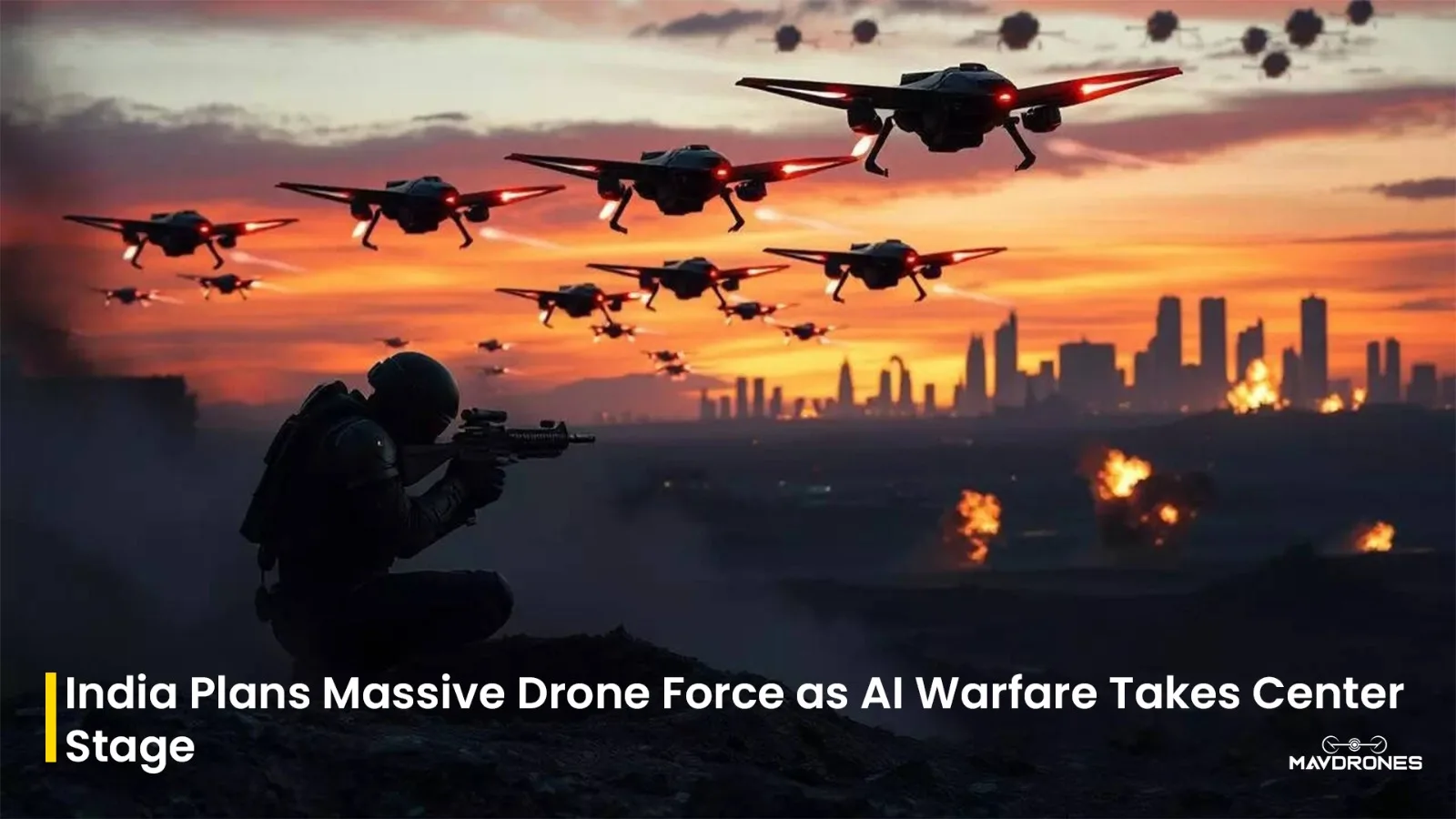
India’s defence establishment is fast moving towards setting up a dedicated Drone Force as the country is reorienting its military strategy around unmanned systems, artificial intelligence and modern battlefield technologies. The decision that has been reported has been influenced by operational lessons from Operation Sindoor and also from global conflicts such as the Russia-Ukraine war and West Asia tensions where drones have emerged as one of the most decisive weapons in combat.
The proposed Drone Force is expected to be the first responder during military operations with major focus on intelligence gathering, surveillance, reconnaissance, electronic warfare and precision strikes. The force will be supported by sophisticated data and cognitive warfare networks as well, highlighting India’s growing focus on AI-driven warfare.
Currently, around 50,000 armed forces personnel are being trained for drone-related operations, the Integrated Defence Headquarters said. 15 specialized Centres of Excellence are planned over the next 3 years to facilitate this transition. These centres are to offer real time combat simulation training through virtual reality systems and advanced battlefield simulators.
Every Soldier May Soon Operate a Drone
Perhaps the most audacious aspect of the new strategy is the use of drones in actual fighting on the front lines. The Indian Army is getting ready to impart basic drone training to each soldier so that unmanned aerial systems become a routine battlefield tool at the individual level.
Also, there are plans afoot to equip each Army corps with some 8,000 drones. The massive induction will help the armed forces to build a network of nearly one lakh drones across various combat formations in an operational manner.
The proposed battlefield architecture represents a significant shift in military doctrine, with lightweight tactical drones anticipated to support soldiers in surveillance, target identification, navigation, and real-time situational awareness during combat operations.
Pakistan Drone Attack Triggered Urgent Reforms
The idea of setting up a dedicated Drone Force, it is said, gained traction after Pakistan’s massive drone operation last year involving nearly 1,000 drones. The attack was believed to be targeted at finding weaknesses in India’s air defence systems and economically draining military resources by forcing them to use costly missile systems against cheap drones.
The incident underscored the growing threat from low-cost unmanned aerial systems and led to India’s push to develop its offensive and defensive drone capabilities.
The Indian armed forces are increasingly using a mix of soft-kill and hard-kill anti-drone technologies to counter future drone threats. Soft-kill systems are jamming and spoofing techniques that aim to inhibit a drone’s communications and navigation systems, while hard-kill systems are laser-based directed energy weapons that can physically destroy an adversarial drone.
AI, Swarm Drones and Electronic Warfare Become Key Priorities
Future military planning in India is now largely focused on drone swarms, autonomous systems and electronic warfare capabilities. Security experts say future conflicts will involve drones that can operate independently of GPS systems, resist jamming attempts and conduct coordinated swarm attacks.
In modern warfare, advanced drones with electro-optical targeting systems and hardened communication links are anticipated.
Thus India is gearing up to beef up anti-drone systems around key military bases, strategic installations and border areas. Efforts are also under way to improve communication resilience to electronic and cyber warfare attacks.
The proposed Drone Force is expected to work in close coordination with Integrated Air Command network of the Indian Air Force and Akashteer air defence system of the Army, providing a more integrated and tech-centric battlefield ecosystem.
Drone Industry and Defence Startups Witness Rapid Growth
The rising focus on drone warfare in India is also resulting in a significant boost in the domestic defence manufacturing industry. This year, close to 20 new companies have reportedly joined the defence ecosystem, focusing on drones, artificial intelligence and electronic warfare technologies.
These startups have the support of thousands of MSMEs that make drones, sensors, communication systems, propulsion technologies and battlefield electronics.
The government’s push to ramp up indigenous defence production has also cut down dependence on imports. According to reports, nearly 75% of India’s defence budget is now being spent domestically, with imports declining over the last year.
India is increasingly developing critical drone and missile technologies that it once bought from foreign suppliers. Now companies like Data Patterns, Solar Industries and PTC Industries are contributing to indigenous defence electronics, sensors and advanced systems.
Border Forces May Also Join Drone Warfare Network
The military is not expected to be the only realm where drone-based operations will grow. Security agencies like the Border Security Force and Indo-Tibetan Border Police are also expected to be plugged into the bigger drone warfare network in future.
The integration is expected to enhance border surveillance, high altitude monitoring, anti-infiltration operations and quick response capabilities in sensitive areas.
With drones already playing a central role in intelligence gathering and tactical operations around the world, India’s latest push is a major shift towards unmanned and AI-enabled warfare, with drone technology set to play a defining role in future combat operations.

CEO, Mavdrones
Pradipta V Mukherjee is the visionary CEO of Mavdrones & Drone Pathshala, driving innovation and growth in the drone industry. With a passion for advanced technology, he leads the company's strategic direction, ensuring Mavdrones stays at the forefront of drone solutions. Under his leadership, Mavdrones has achieved remarkable success, including winning the 'Best Innovation and Technology in Drone Industry' award from ASSOCHAM. Pradipta is committed to revolutionizing the industry through advanced UAV technology, fostering a culture of excellence and forward-thinking within the organization.