Uses of Drones in Agriculture

Agriculture is undergoing one of the most significant technological transformations in history. As global food demand rises and climate challenges intensify, farmers are turning to advanced technologies to improve productivity, reduce waste, and make smarter decisions. Among these innovations, drones have emerged as one of the most impactful tools in modern farming. Far from being simple flying cameras, agricultural drones are intelligent data-collection and application systems that support precision agriculture. In this detailed blog, we will explore how drones are reshaping farming through three major applications: crop monitoring, precision spraying, and data-driven farm management.
1. Advanced Crop Monitoring and Field Intelligence
One of the most powerful contributions drones make to agriculture is real-time crop intelligence. Traditional crop scouting requires farmers or agronomists to physically walk through fields, inspecting plants manually. This process is time-consuming, labor-intensive, and often limited to small sample areas. In contrast, drones can survey hundreds of acres within minutes, providing a complete aerial perspective. Equipped with multispectral and thermal sensors, agricultural drones capture data beyond what the human eye can see. These sensors measure plant reflectance levels and generate vegetation indices such as NDVI (Normalized Difference Vegetation Index).
This data reveals:
- Early signs of plant stress
- Nutrient deficiencies
- Pest and disease outbreaks
- Water stress patterns
The real advantage lies in early detection. By identifying subtle changes in plant health before visible symptoms appear, farmers can intervene quickly. Instead of treating an entire field, they can target only affected zones, reducing input costs and minimizing crop loss. Leading agricultural drone manufacturers like DJI have developed models specifically designed for high-precision agricultural mapping and monitoring, enabling farmers to generate accurate field analytics with minimal effort. In essence, drones transform fields into data-rich environments where decisions are driven by evidence rather than guesswork.
2. Precision Spraying and Resource Optimization
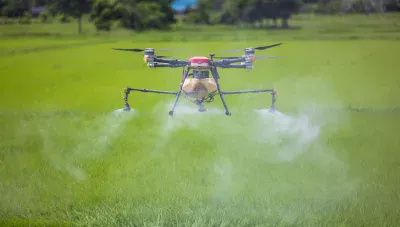
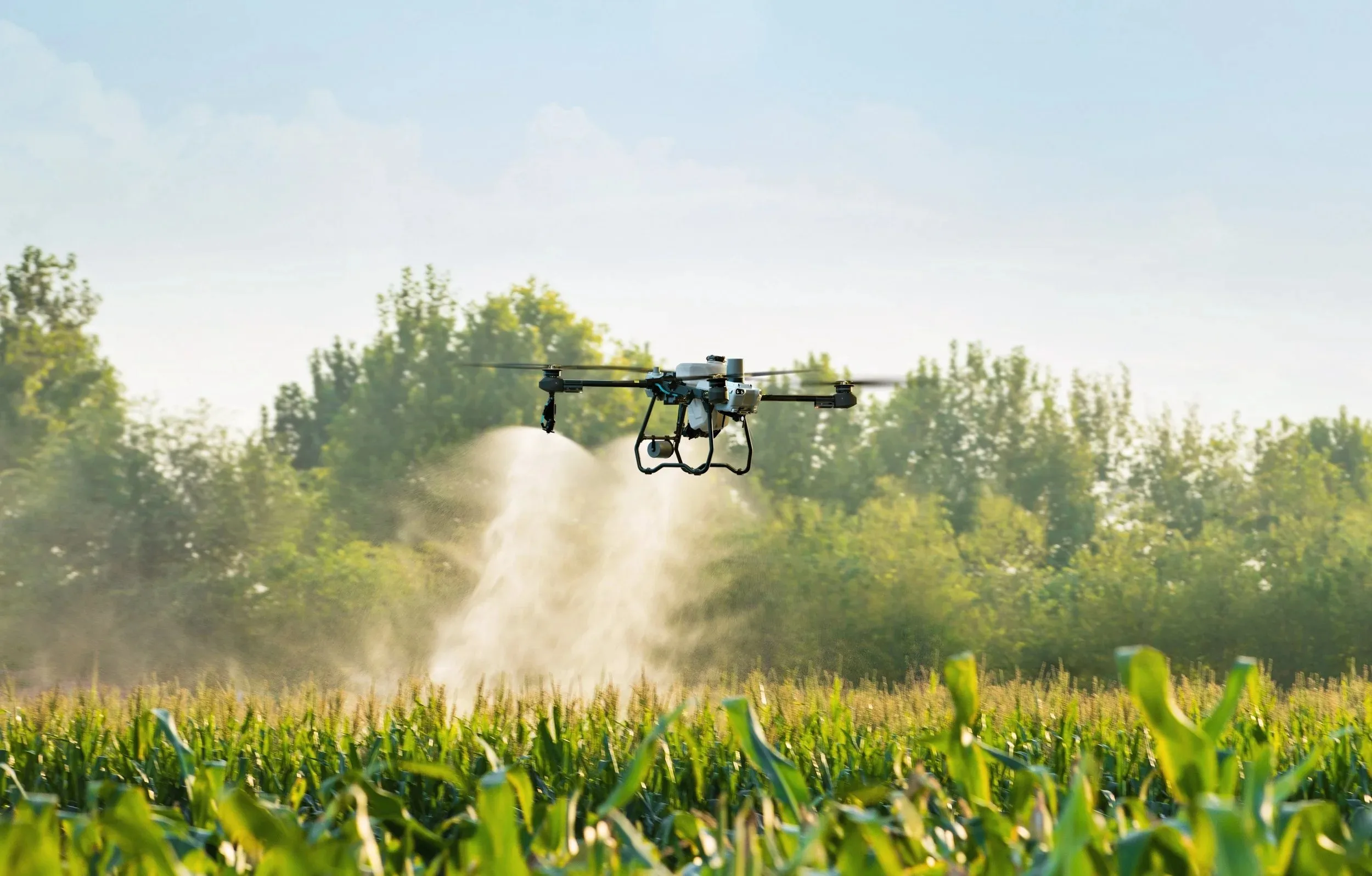
Another transformative use of drones in agriculture is precision spraying. Conventional spraying methods often result in over-application of chemicals, uneven coverage, and environmental contamination. Tractor-based systems can compact soil, while manual spraying increases human exposure to potentially harmful substances. Agricultural drones address these challenges through targeted application technology. Using GPS-guided flight paths and variable-rate technology, drones spray fertilizers, herbicides, or pesticides precisely where needed. The agriculture spraying drone price varies from 2 lakhs – 50 lakhs.
The benefits are substantial:
- Reduced chemical usage
- Lower operational costs
- Minimal environmental impact
- Increased worker safety
- Improved crop uniformity
The agriculture spraying drones are available of different capacity:
- 10 Litre Agriculture Spraying Drone
- 16 Litre Agriculture Spraying Drone
- 20 Litre Agriculture Spraying Drone
- 30 Litre Agriculture Spraying Drone
- 50 Litre Agriculture Spraying Drone
Drones can also access areas that are difficult or dangerous for traditional machinery, such as steep slopes, muddy terrain, or waterlogged fields. Some advanced systems integrate mapping data from previous flights to create automated spraying routes. This ensures consistency and eliminates overlap, further enhancing efficiency. By optimizing input usage, drones contribute directly to sustainable farming practices while maintaining high productivity levels.
3. Data-Driven Decision Making and Farm Management
Modern agriculture is no longer just about planting and harvesting, it is about managing data. Drones collect vast amounts of information, including plant density, growth rates, canopy coverage, and soil variability. When combined with artificial intelligence and farm management software, this data becomes a strategic asset.
- Farmers can use drone analytics to:
- Forecast yields more accurately
- Plan irrigation schedules
- Optimize planting density
- Identify long-term soil patterns
- Improve harvest timing
This level of insight enables predictive farming rather than reactive farming. Instead of responding to visible damage, farmers can anticipate issues and adjust their strategies in advance. Furthermore, drone-generated maps and reports support better financial planning. Accurate yield estimation helps farmers manage supply chains, storage logistics, and market commitments with greater confidence. As agricultural operations scale, especially in large commercial farms, data-driven management becomes essential, and drones serve as a primary data collection engine.
The Broader Impact on Sustainable
Agriculture Beyond operational efficiency, drones play a significant role in promoting sustainability. By reducing chemical overuse, conserving water through precise irrigation insights, and minimizing fuel consumption from heavy machinery, drones help lower agriculture’s environmental footprint. With climate change affecting rainfall patterns and increasing the frequency of extreme weather events, farmers need adaptive tools. Drone-based monitoring allows rapid post-storm assessment and recovery planning, strengthening farm resilience. The integration of drone technology also aligns with global efforts toward climate-smart agriculture and food security.
Challenges and Considerations
While the benefits are substantial, adopting drone technology requires careful planning. Farmers must consider,
Initial equipment investment
Regulatory compliance for drone operations
Training for effective data interpretation
Maintenance and software integration
However, as technology advances and costs decline, drone adoption is becoming more accessible, even for small and medium-sized farms.
The Future of Drones in Agriculture
The future of agricultural drones lies in automation and integration. Autonomous drone fleets, AI-powered disease detection, and real-time cloud-based analytics are already emerging trends. As connectivity improves in rural areas, drones will seamlessly integrate with IoT devices, smart irrigation systems, and autonomous farm equipment, creating a fully connected agricultural ecosystem. In the coming decade, drones will likely shift from being optional tools to becoming core infrastructure in precision farming.
Conclusion
Drones are not simply enhancing agriculture, they are redefining it. Through advanced crop monitoring, precision spraying, and data-driven management, drones empower farmers to produce more with fewer resources. They reduce waste, improve sustainability, and increase profitability, all while addressing the growing global demand for food. The transformation of agriculture is underway, and drones are at the center of this revolution, elevating farming to new heights, quite literally.

CEO, Mavdrones
Pradipta V Mukherjee is the visionary CEO of Mavdrones & Drone Pathshala, driving innovation and growth in the drone industry. With a passion for advanced technology, he leads the company's strategic direction, ensuring Mavdrones stays at the forefront of drone solutions. Under his leadership, Mavdrones has achieved remarkable success, including winning the 'Best Innovation and Technology in Drone Industry' award from ASSOCHAM. Pradipta is committed to revolutionizing the industry through advanced UAV technology, fostering a culture of excellence and forward-thinking within the organization.