Fixed Wing Drone: Features, Benefits, Applications, and Future Trends

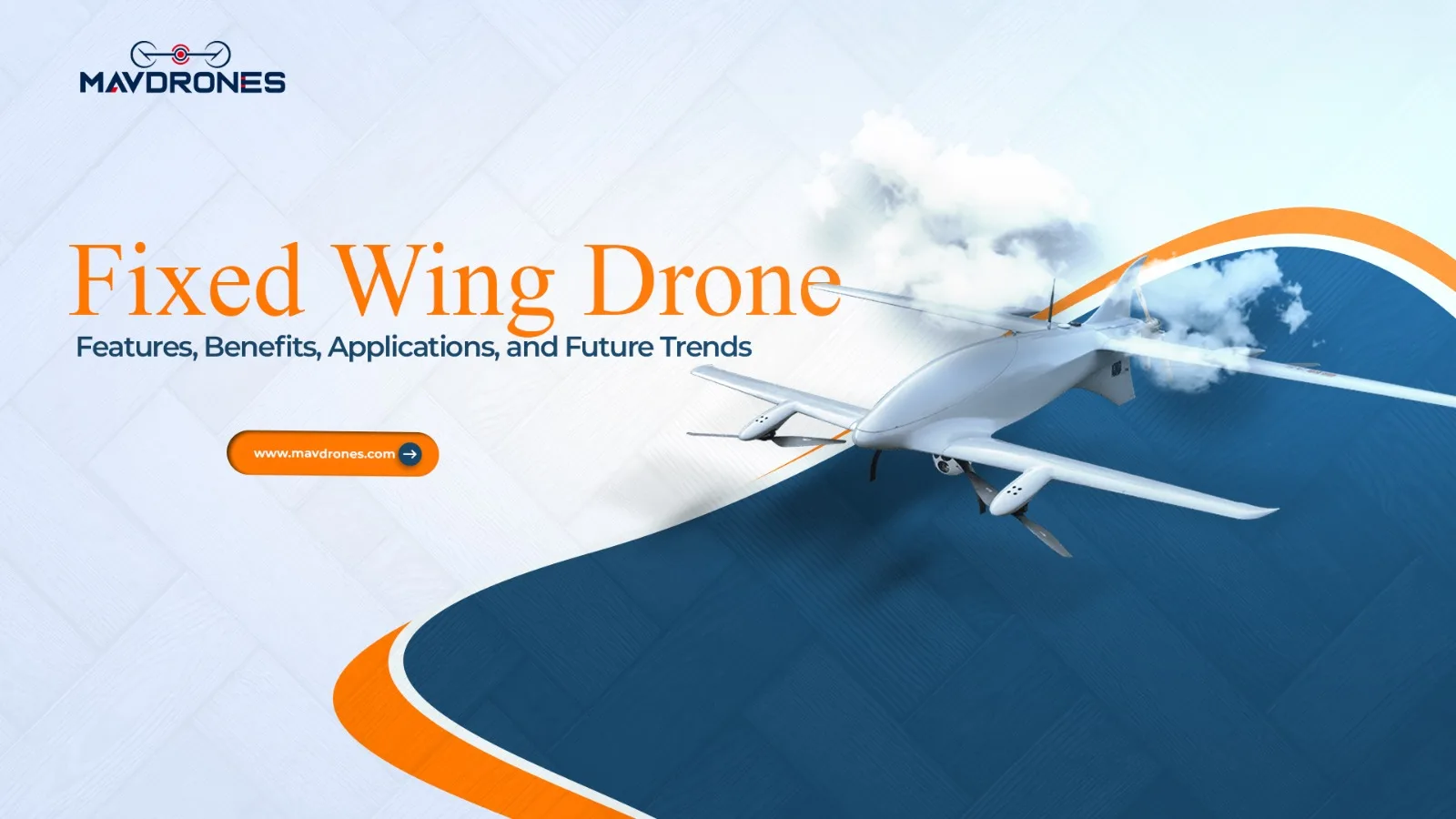
The drone industry has grown very quickly in the last few years. The fixed-wing drone is one type of drone that has gotten a lot of attention because it can do a lot of different things and is very advanced. These unmanned aerial vehicles (UAVs) are changing industries by making them more efficient and accurate in a wide range of tasks. In this detailed guide, we’ll look at fixed-wing drones in depth, covering what they are, how they work, their main benefits, and the many industries that can use them.
What is a Fixed Wing Drone?
A fixed-wing drone is a type of UAV that has wings like an airplane to help it fly. Fixed-wing drones use aerodynamic wings to lift them off the ground, while rotary drones (multirotors) use spinning propellers to do the same. These drones are more like regular airplanes and are usually made to fly for longer periods of time and cover more ground.
Fixed-wing drones need a runway or catapult to take off and may need a specific place to land. Some models do come with parachutes or vertical takeoff and landing (VTOL) systems, though. Their design makes them perfect for surveying big areas, mapping out land, or doing aerial surveillance for long periods of time.
Key Components of a Fixed Wing Drone
- Wings: Fixed-wing drones have wings that are stiff and made to help them fly.
- Engines/Propellers: Engines and propellers give the drone the power it needs to move forward.
- Flight Controller: The flight controller is the drone’s brain. It keeps the drone stable and flying well.
- GPS and Navigation System: Necessary for accurate positioning and flying on its own.
- Battery: Fixed-wing drones usually have bigger batteries than multirotor drones, which lets them fly for longer periods of time.
How Fixed Wing Drones Work?
The main idea behind fixed-wing drones is that they can fly because their wings are aerodynamic. The drone’s engine moves it forward, and the air that flows over the wings pushes it up, lifting it off the ground. This is how regular airplanes work.
Fixed-wing drones have control surfaces like ailerons, elevators, and rudders that let them roll, pitch, and yaw, giving you precise control while flying. The flight controller keeps the drone stable by constantly changing how it moves, even when the weather changes.
Many fixed-wing drones come with autopilot systems that let them fly missions on their own. This technology has changed the way agriculture, surveying, and infrastructure inspection work by making them more efficient and less likely to make mistakes.
Advantages of Fixed Wing Drones
For some uses, fixed-wing drones are better than multirotor UAVs because they have a number of unique benefits. Here are some important benefits:
- Extended Flight Time: One of the best things about fixed-wing drones is that they can stay in the air for much longer than multirotor drones. Fixed-wing UAVs can stay in the air for a few hours, but multirotors usually only stay in the air for 20 to 30 minutes.
- Larger Coverage Area: Fixed-wing drones can fly longer distances and cover more ground in a single flight because of their aerodynamic design. This is especially useful for fields like agriculture, environmental monitoring, and geographic mapping.
- Higher Efficiency: When it comes to using energy, fixed-wing drones are better. Their aerodynamic shape lets them glide through the air with less power, which lowers their overall energy use.
- Increased Stability in Windy Conditions: In general, fixed-wing drones work better in windy weather than multirotor drones. They are a better choice for flying in areas with strong winds, like coastal areas or mountains.
- Cost-Effective for Large-Scale Projects: Fixed-wing drones usually cost more up front than multirotors, but they are more cost-effective for long-term or large-scale projects because they can fly longer and cover more ground.
Applications of Fixed Wing Drones
Fixed-wing drones can be used in many different industries because they are so flexible. Let’s look at some of the most common uses for fixed-wing drones:
- Aerial Surveying and Mapping: Drones with high-resolution cameras, LiDAR (Light Detection and Ranging), and thermal sensors can gather a lot of information from big areas.
- Agricultural Monitoring: Farmers can use fixed-wing drones to keep an eye on the health of their crops, track irrigation systems, and monitor pesticide effectiveness.
- Environmental Monitoring: Fixed-wing drones are used to monitor forests, wetlands, and wildlife habitats, providing critical information about biodiversity and ecosystem health.
- Search and Rescue Operations: Fixed-wing drones help find missing people or search for survivors in disaster areas, especially with thermal imaging cameras.
- Infrastructure Inspection: Fixed-wing drones are used to inspect bridges, power lines, and communication towers, reducing risks and speeding up repairs.
- Military and Defense: The military uses fixed-wing drones for surveillance, reconnaissance, and border patrol.
Choosing the Right Fixed Wing Drone
When choosing a fixed-wing drone, consider the following:
- Flight Time: How long do you want the drone to stay in the air?
- Payload Capacity: How heavy are the equipment or sensors you plan to carry?
- Range: How far does the drone need to fly?
- Durability: Will the drone need to withstand tough conditions?
- Autonomy: Look for drones with advanced autopilot systems if you need fully autonomous flights.
The Future of Fixed Wing Drones
As technology improves, fixed wing drones are becoming more powerful, efficient, and flexible, with advancements in battery life, sensor technology, and automation. The addition of 5G networks and AI-powered analytics will enhance these drones’ ability to send and receive data in real-time and make smarter decisions.
Conclusion
Fixed-wing drones are revolutionizing aerial surveillance, mapping, and monitoring. Their ability to fly for long durations, cover extensive areas, and operate efficiently makes them essential for various industries, including agriculture, defense, and infrastructure.
As the technology behind fixed-wing drones continues to improve, their impact will only grow. Whether you’re in agriculture, defense, or infrastructure, integrating a fixed-wing drone into your operations can provide a significant competitive edge.
Are you ready to use a fixed wing drone to take your business to the next level? Discover what this new technology can do and how it can benefit you today!

CEO, Mavdrones
Pradipta V Mukherjee is the visionary CEO of Mavdrones & Drone Pathshala, driving innovation and growth in the drone industry. With a passion for advanced technology, he leads the company's strategic direction, ensuring Mavdrones stays at the forefront of drone solutions. Under his leadership, Mavdrones has achieved remarkable success, including winning the 'Best Innovation and Technology in Drone Industry' award from ASSOCHAM. Pradipta is committed to revolutionizing the industry through advanced UAV technology, fostering a culture of excellence and forward-thinking within the organization.