Indian Army to Deploy Radar-Invisible Drones for Electronic Warfare Edge

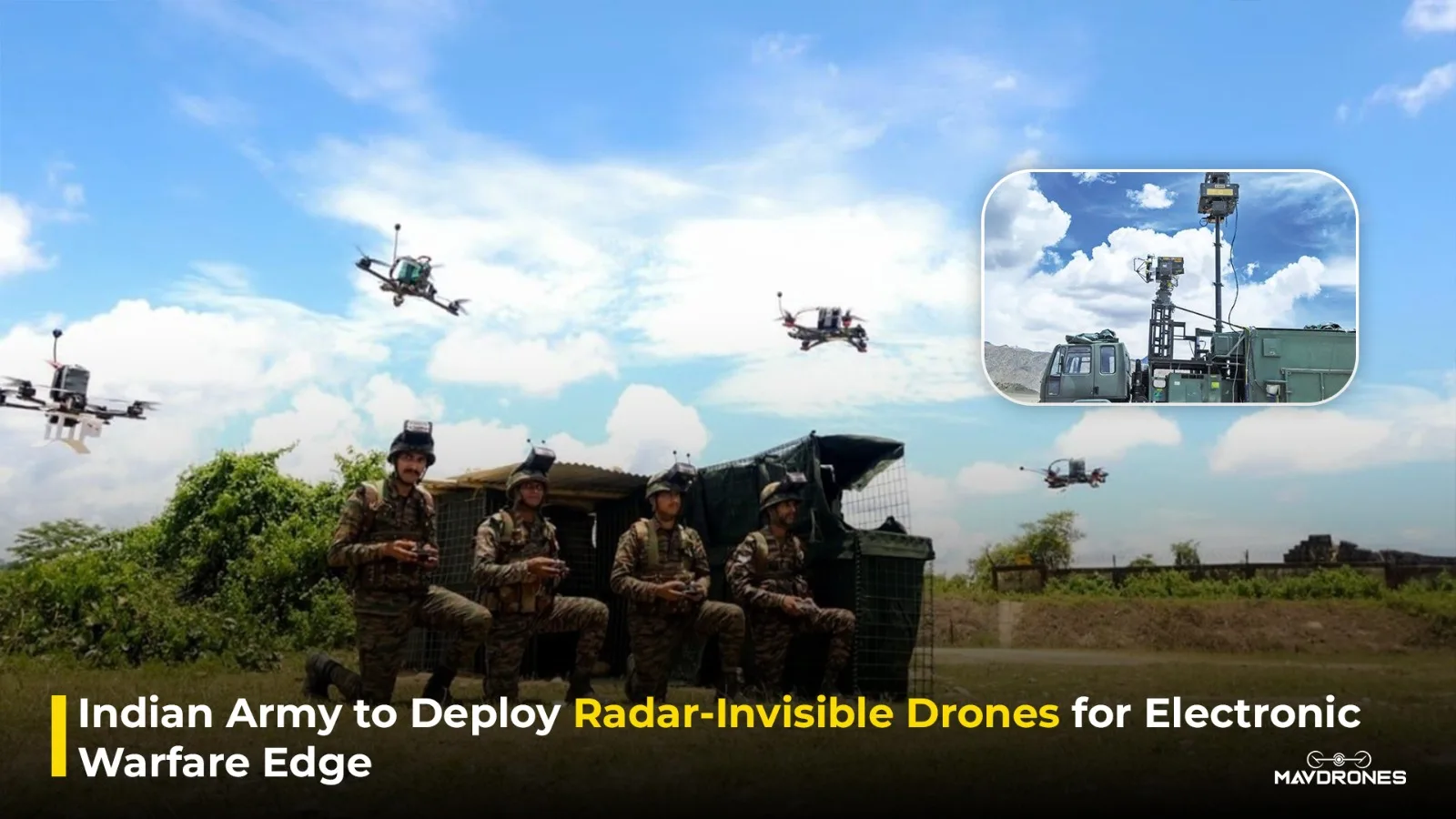
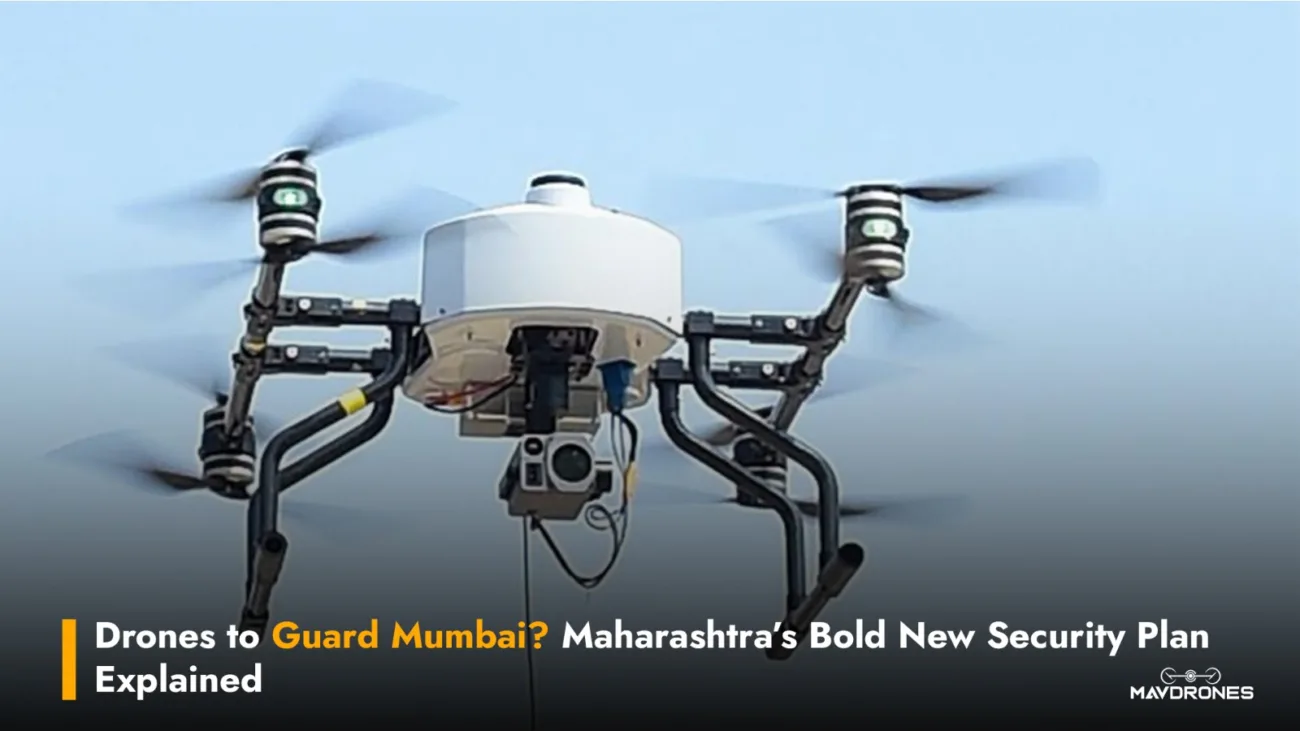
Up to 70 radar-evading remotely piloted aircraft (RPA) and more than 670 other unmanned aerial vehicles are expected to be acquired over the next several years, according to the Indian Army’s recently published Technology Perspective and Capability Roadmap (TPCR), which outlines a major expansion of unmanned aerial assets. The roadmap highlights long-range, stealthy platforms as a top priority for operations in the future and lays out capability requirements for the next 15 years.
The 55–70 platforms required by the stealth RPA requirement are expected to have service lives of about 20 years after induction. With a mission set that extends well beyond tactical battlefield surveillance, these systems are characterized as high-endurance, high-altitude platforms that can operate at heights in the 50,000–60,000 foot range and have a range of roughly 1,500 kilometers.
The ability to operate in stealth has been explicitly mandated. Combining aerodynamic shaping, specialized building materials, and radar-absorbing structures will result in a low radar cross-section (RCS) design. In order to allow these RPAs to enter contested airspace for prolonged ISR and electronic missions, the goal is to reduce detectability by adversary radar networks.
Instead of portraying these RPAs as strike platforms, the TPCR mainly frames them as non-kinetic assets. Signals intelligence suites, interception and jamming packages, and sensors for NBC (nuclear, biological, and chemical) agent detection are anticipated payloads. This suggests that, in addition to conventional intelligence collection, attention will be paid to electronic warfare (EW), strategic reconnaissance, and WMD monitoring.
The specification places a strong emphasis on datalink security and communications. Controlling these RPAs and safeguarding the flow of sensitive mission data from interception or jamming will require long-range, beyond-line-of-sight links, which include reliable satellite communications and anti-interference measures.
Additionally, the TPCR sees RPAs playing a significant role in streamlining the Army’s kill chain. To enable quicker target acquisition and engagement cycles, information collected by stealth platforms is to be combined with data from other sensors and quickly transmitted to artillery and strike assets. The goal of this integration is to decrease friendly exposure while increasing battlefield lethality and responsiveness.
The roadmap calls for a wide range of UAVs in addition to the stealth fleet, including heavy high-altitude long-endurance systems, medium-altitude platforms, and tactical and vertical-takeoff-and-landing (VTOL) drones for short-range reconnaissance, logistics, and loitering missions. The total figures indicate a sizable, tiered unmanned system intended to offer multi-domain support and continuous coverage.
One theme that keeps coming up is operational resilience. The required systems must be robust against electronic warfare, long-lasting, and maintainable. Important enablers for dependable performance in contested environments are identified as autonomy, onboard AI for automatic target recognition and mission management, and the capacity to function in GPS-denied environments.
The TPCR strategically marks a change to information-centric warfare, where electronic capabilities and covert sensing become force multipliers. The roadmap aims to give commanders a more accurate, quicker, and resilient situational picture for upcoming conflicts by giving priority to RPA platforms that are optimized for intelligence, EW, and NBC detection. It also plans integration with artillery and other effectors.
The TPCR’s implementation will necessitate ongoing investments in sensors, secure communications, ground control infrastructure, training, and the ability of the domestic industry to manufacture and maintain cutting-edge unmanned systems. The proposed RPA and UAV fleet, if deployed as planned, would mark a significant advancement in electronic warfare and aerial reconnaissance capabilities.


CEO, Mavdrones
Pradipta V Mukherjee is the visionary CEO of Mavdrones & Drone Pathshala, driving innovation and growth in the drone industry. With a passion for advanced technology, he leads the company's strategic direction, ensuring Mavdrones stays at the forefront of drone solutions. Under his leadership, Mavdrones has achieved remarkable success, including winning the 'Best Innovation and Technology in Drone Industry' award from ASSOCHAM. Pradipta is committed to revolutionizing the industry through advanced UAV technology, fostering a culture of excellence and forward-thinking within the organization.