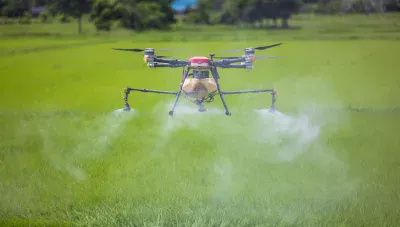
How Indian Construction Companies Are Using Drones to Cut Costs and Improve Safety


Drones, a technology that is no longer futuristic, are driving the Indian construction industry into a new era of efficiency, speed, and safety.
Drones, which were previously only utilized for military surveillance or aerial photography, are now revolutionizing the way Indian builders handle everything from site inspections to topographic surveys. The outcome? fewer safety incidents, lower operating costs, and quicker project execution.
Let’s examine how Indian construction companies are using drones to make their operations safer, smarter, and more lucrative.
Why Drones Are Changing Construction in India?
With over 9% of the country’s GDP coming from the construction sector, India has one of the biggest construction industries in the world. However, it is also under pressure because traditional methods are no longer viable due to tight project deadlines, labor shortages, and rising material costs.
Drones can help with that.
In the construction industry, drones enable businesses to:
- Track websites in real time
- Perform rapid structural and land surveys.
- Boost compliance and safety
- Minimize human error and manual labor
A 2024 report from Invest India claims that in just two years, the use of drones in construction and infrastructure has grown by more than 250%.

Benefits of Using Drones for Indian Construction Companies
1. Faster, More Accurate Site Surveys
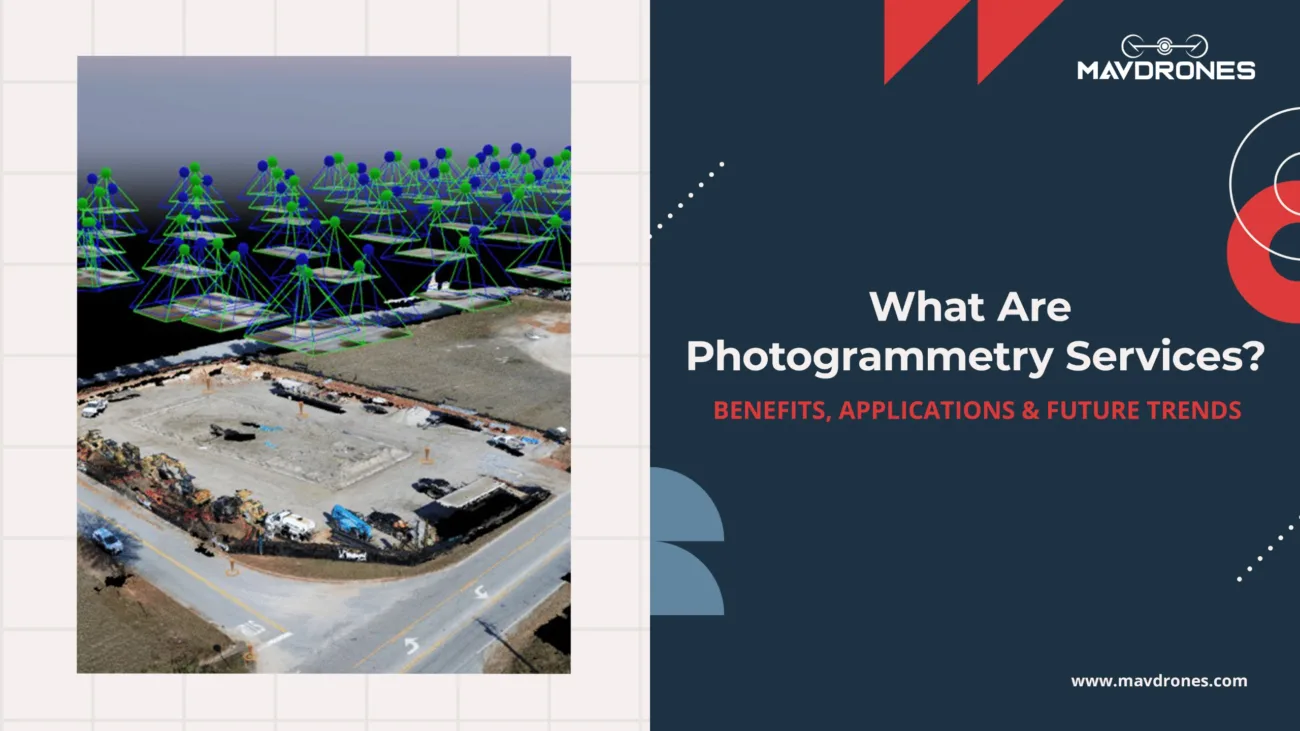
It can take days or weeks to survey large sites with conventional tools. LiDAR, photogrammetry, and RTK GPS-equipped drones can map large areas in a matter of hours with accuracy down to the centimeter.
Drone mapping is useful in areas like Gujarat and Maharashtra where extensive infrastructure projects are being carried out because it:
- Layouts for plotting
- Finds the volumes of earthwork
- Uses 3D models to track progress
2. Significant Cost Savings
Even though professional construction drones can cost anywhere from ₹3 to ₹30 lakh up front, Indian businesses are saving lakhs on each project by:
- Cutting back on personnel for regular inspections
- Reducing downtime of equipment
- Early error detection prevents expensive rework.
For instance, a large road contractor in Tamil Nadu claimed that by employing drones for daily site assessments, they were able to save ₹8 lakh a month on labor and inspection expenses.
3. Improved On-Site Safety
Workers no longer have to scale scaffolding, enter dangerous areas, or operate near large machinery thanks to drones. Safety results are directly impacted by this.
Using inspection by drone:
- The chance of an accident is reduced
- Early detection of site hazards
- The efficiency of emergency response increases
Drones that use thermal imaging can even identify electrical problems, equipment that is overheating, or gas leaks before they become hazardous.
4. Smarter Project Monitoring
Video footage is no longer the only type of drone data. It is intelligence that can be put to use.
Drones that integrate AI and software can:
- Monitor the status of the project
- Compare the architectural plans with the current state of construction.
- Automated notifications of delays or deviations should be sent.
- For remote project managers, upload video to the cloud.
This is especially beneficial for public sector projects where transparency and third-party audits are crucial.\
Real-World Applications in India
Drones are being used by Indian developers in a number of ways:
- Smart Cities: In places like Pune, Lucknow, and Visakhapatnam, urban development zones are mapped using drones.
- Highway Projects: To track the status of road construction nationwide, NHAI uses drones.
- Metro Construction: Using 3D visualization, drones assist in the management of subterranean construction in Bengaluru and Delhi.
- Real Estate Projects: Aerial progress photos are used by builders for marketing and investor updates in real estate projects.
- Railway Infrastructure: Indian Railways is using drones to survey corridors and inspect bridges.
Regulations You Need to Know (India-Specific)
Operating drones in India requires compliance with DGCA guidelines:
- UIN Registration on the Digital Sky Platform
- Pilot Certification from a DGCA-approved RPTO
- NPNT-compliant drones (No Permission No Takeoff)
- Operations must follow Green Zone/Restricted Zone rules
As of 2023, the Indian government has also relaxed several norms for drone use in construction and infrastructure under its push for “Drone Shakti” and Gati Shakti missions.
Starting Your Drone Program in Construction
Here’s how to get started if you’re thinking about incorporating drones into your company:
- Determine Use Cases: progress monitoring, structural inspection, site mapping, or all three.
- Select the Appropriate Drone: Choose according to the payload requirements (thermal, LiDAR, camera, etc.)
- Develop Your Staff: Enroll your site managers or engineers in accredited training courses.
- Establish Data Workflow: Connect drone data to the project management software you currently use.
To ensure legal compliance, register your drone and obtain the necessary authorizations prior to taking off.
Partner or Build In-House?
In order to learn the technology, many Indian construction companies start by outsourcing surveys or inspections to a drone services partner. They eventually bring drone operations in-house with skilled internal teams, which improves control and lowers long-term expenses.
Having your own certified drone operator is quickly turning into a competitive advantage when working on government projects or infrastructure tenders.
The Competitive Edge is in the Air
By adopting drone technology, Indian construction companies are already outperforming their rivals. In addition to keeping their teams safer on the ground, they are finishing projects more quickly, with fewer mistakes, and for less money.
Early adopters will have superior systems, skilled teams, and in-depth knowledge as drone adoption becomes commonplace, transforming technology into a sustainable advantage.
“Should we use drones?” is no longer the question.
“How soon can we start?” is the question.

CEO, Mavdrones
Pradipta V Mukherjee is the visionary CEO of Mavdrones & Drone Pathshala, driving innovation and growth in the drone industry. With a passion for advanced technology, he leads the company's strategic direction, ensuring Mavdrones stays at the forefront of drone solutions. Under his leadership, Mavdrones has achieved remarkable success, including winning the 'Best Innovation and Technology in Drone Industry' award from ASSOCHAM. Pradipta is committed to revolutionizing the industry through advanced UAV technology, fostering a culture of excellence and forward-thinking within the organization.